
Accessible attention points and call points ensure the autonomy, safety, and dignity of people with disabilities in both public and private spaces. Their presence not only reflects inclusion criteria but is also supported by technical and legal regulations.
Accessible Attention Point
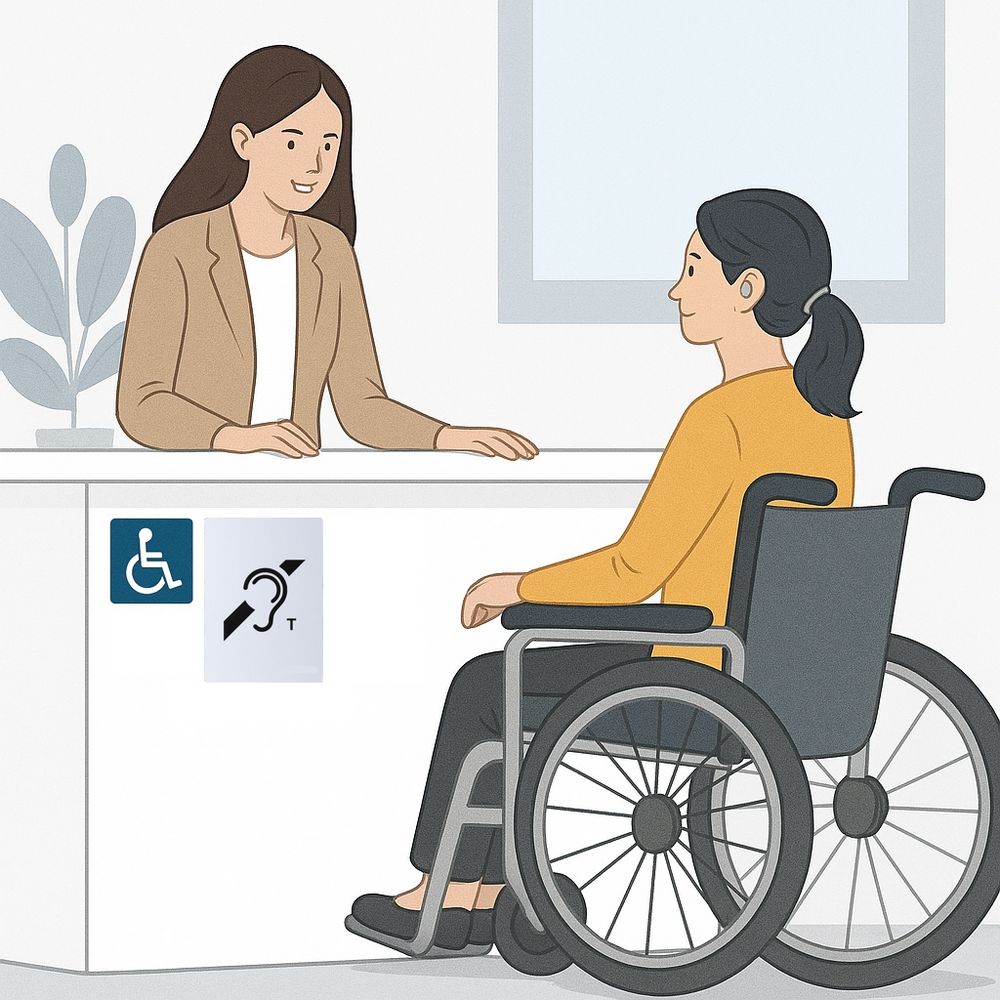 An accessible attention point is a space or device that allows any person — including those with physical, sensory, or cognitive disabilities — to receive information, assistance, or carry out procedures independently and safely. It may be a reception desk, counter, service window, interactive totem, or intercom, as long as it meets established accessibility requirements.
According to the Universal Accessibility Technical Guide and the Spanish Technical Building Code (CTE) DB SUA, these points must ensure:
- Physical access: appropriate height, clear space for wheelchair access, absence of obstacles.
- Sensory accessibility: induction loop, visual and tactile signage, color contrast.
- Understandable interaction: clear messages, standardized pictograms, confirmed response.
Their purpose is to facilitate direct communication between the user and building staff, whether to request assistance, receive instructions, or access services.
Accessible Call Point
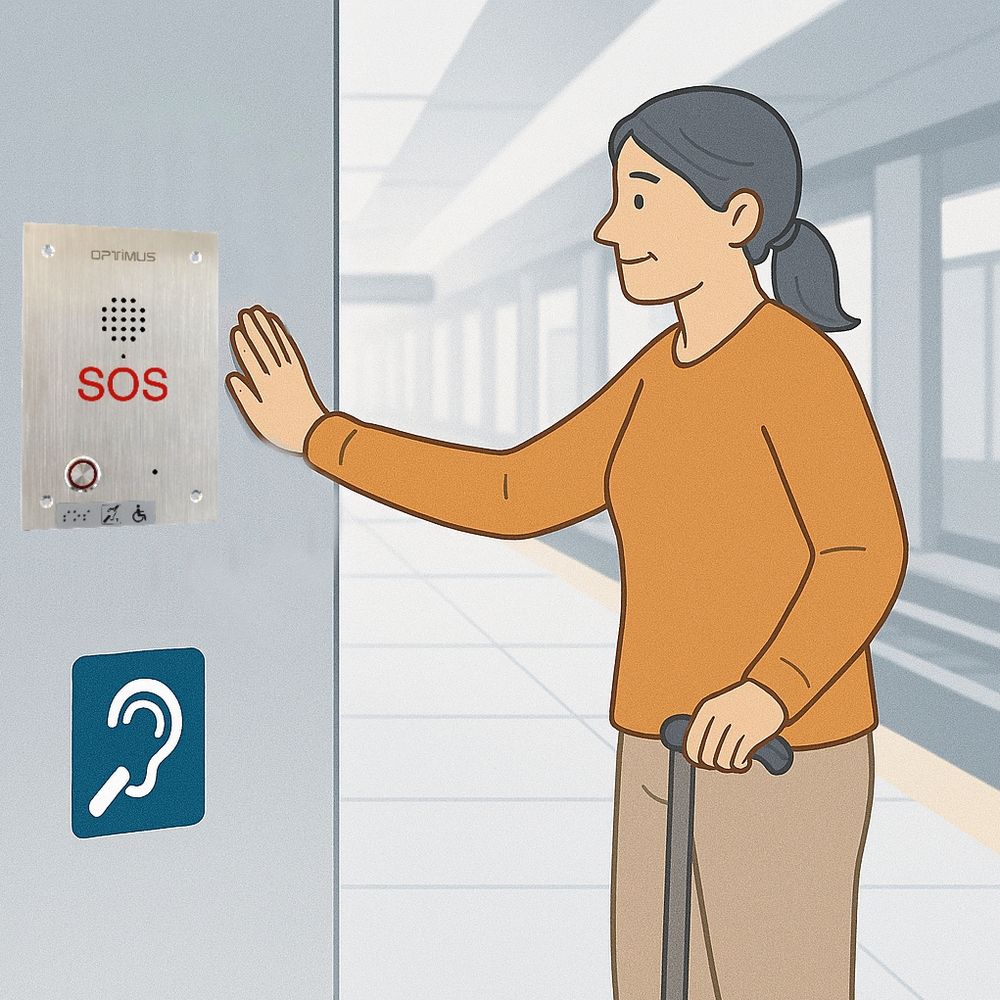 An accessible call point is an intercom or alarm device that allows a person with a disability to send a distress signal or request assistance, especially in emergency or vulnerable situations.
According to CTE DB SUA3, these devices must:
- Be easily reachable.
- Emit a signal that is perceptible from a control point or frequently used area.
- Allow the user to verify that their call has been received.
- Not require excessive force or complex motor skills to activate.
Although the CTE does not specify a particular technical standard, it is recommended to follow universal design principles and apply standards such as ISO 21542 or UNE-EN 60118-4 for hearing compatibility.
Where and When Are Accessible Attention and Call Points Mandatory?
The requirement to provide accessible attention and call points is regulated by the Spanish Technical Building Code (CTE), particularly in the Basic Document on Safety of Use and Accessibility (DB SUA), as well as complementary standards such as ISO 21542 and regional accessibility legislation.
In general terms, they must be installed in locations where there is a risk of isolation or lack of direct supervision, high traffic of people with functional diversity, and a need for rapid communication with building staff. Typical scenarios include:
- Train or metro platforms, to request help in case of a fall, disorientation, or medical emergency.
- Shopping centers, in rest areas, wide corridors, parking access points, or elevators.
- Hospitals and healthcare centers, in waiting rooms, long corridors, and secondary entrances.
- Airports and terminals, at information points, boarding areas, and transit zones without visible staff.
- Administrative or cultural buildings, in lobbies, service areas, and non-primary entrances.
- All accessible restrooms and spaces where isolation may occur: changing rooms, waiting areas, unsupervised transit zones…
In new buildings, installation is mandatory from the project phase, while in existing buildings it may be required during renovations, changes of use, or technical inspections. Regional governments may establish stricter additional requirements.
What should the device be like at an accessible attention or call point?
Devices installed at accessible attention and call points must meet a series of technical and functional requirements to ensure usability by people with disabilities, in accordance with CTE DB SUA, ISO 21542, UNE-EN 60118-4 (for hearing compatibility), and universal design principles.
At an accessible attention point, the device must be installed at a height reachable from a wheelchair and have clear frontal space to allow direct approach. Depending on the needs, it should incorporate communication elements such as an induction loop, call initiation features, and interaction confirmation...
Application: accessible toilets and changing rooms
At an accessible call point, the device must be designed to be activated in emergency situations, especially from a seated position, with simple activation that does not require excessive force or fine motor skills. It must include visual and/or acoustic confirmation that the call has been sent and received, clear signage with emergency and accessibility pictograms, direct connectivity with a control point or building staff, and protection against moisture and vandalism, especially in environments such as toilets or changing rooms.
OPTIMUS solutions for accessible attention points
The compact SMARTLOOP unit is an “all-in-one” solution that integrates the induction loop and amplifier into a single device, suitable for counters, receptions, ticket offices, or customer service points. Its installation is quick and simple, enabling clear and direct communication with users of hearing aids, in compliance with IEC 60118-4.

- Discreet and functional design, suitable for small spaces.
- Compatible with existing microphones and service systems.
- Clear signage indicating the presence of an induction loop.
- Enhances sensory accessibility in face-to-face service environments.
In addition to SMARTLOOP, we offer other induction loop solutions adapted to different configurations and technical needs. These solutions can be paired with classic “hands-free” intercom kits such as SIV-40 or SIV-50, to fully equip counters and service windows.
compact induction loops intercom systems for service windows
OPTIMUS solutions for accessible call points
The EP-44SIPH intercom is a robust and versatile solution for accessible call points in public spaces such as platforms, corridors, waiting areas, or secondary entrances. It uses the standard SIP protocol, allowing direct integration into the building’s IP telephony systems.

- Stainless steel front plate, metal push button, and accessibility pictogram.
- Ongoing call with pre-recorded message and visual confirmation.
- Highly visible red SOS letters and SOS in braille.
- Built-in induction loop for users with hearing disabilities.
- Weatherproof with IP65 protection and IK10 vandal resistance.