
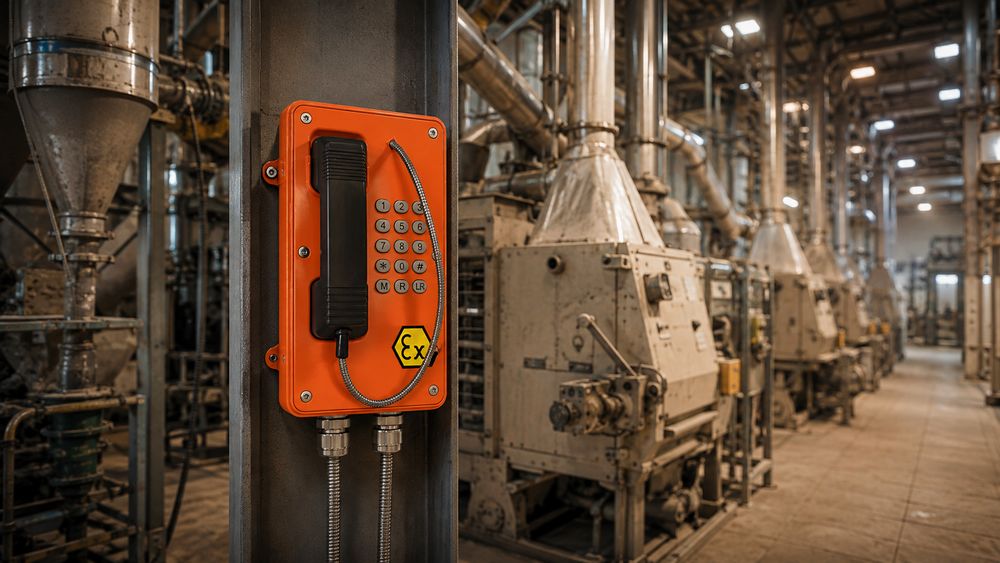
 Promotional image in a simulated environmentIn heavy industrial facilities—such as petrochemical plants, refineries, offshore platforms, the pharmaceutical industry, or mining—public address, voice alarm, and intercom systems play a vital role in personnel safety. Furthermore, in the presence of potentially explosive atmospheres, any field equipment installed in these areas must strictly comply with the ATEX directive.
The ATEX regulations encompass a wide range of legal provisions and technical directives. When specifying and selecting communication equipment, the key lies in knowing how to accurately interpret the specifications and markings on technical datasheets to ensure that the device meets the requirements of the installation site.
How to Interpret ATEX Specifications
To verify whether a terminal is suitable for a specific environment, manufacturers' technical datasheets break down the ATEX protection level into several fundamental parameters:
1) Zone Classification (Risk Frequency)
Determines the likelihood and duration of the presence of an explosive atmosphere at the installation location:
For Gases, Vapors, and Mists:
- Zone 1: An explosive atmosphere is likely to occur occasionally during normal operation.
- Zone 2: The formation of an explosive atmosphere is unlikely to occur and, if it does, will persist for a short period only.
For Combustible Dusts:
- Zone 20, 21, and 22: Classify the presence of clouds or layers of flammable dust in suspension, with Zone 20 representing continuous presence and Zone 22 representing sporadic presence.
2) Gas Group (Explositivity Level)
The directive classifies chemical substances according to their ignition energy. For surface electrical equipment (Group II), gases are structured into:
- IIA: Lower risk gases (such as propane).
- IIB: Medium risk gases (such as ethylene).
- IIC: The most demanding category, covering highly volatile and flammable gases such as hydrogen or acetylene. Equipment certified for IIC is automatically suitable for IIB and IIA groups.
3) Temperature Classes (T1 to T6)
In an explosive environment, a gas can ignite not only from an electrical spark; it can also explode if it comes into contact with an excessively hot surface (its auto-ignition temperature). For this reason, the standard requires equipment to indicate its Temperature Class, which specifies the maximum temperature the outer enclosure of the equipment will reach during full operation. The classes are structured as follows:
- T1: Equipment surface temperature can reach up to 450 °C
- T2: Surface temperature will not exceed 300 °C
- T3: Surface temperature will not exceed 200 °C
- T4: Surface temperature will not exceed 135 °C
- T5: Surface temperature will not exceed 100 °C
- T6: Surface temperature will never exceed 85 °C (the most demanding and safest level).
The Relationship Between ATEX, IK, IP, and Operating Temperature
In high-demand projects, ATEX certification does not operate in isolation. Equipment in an explosive industrial environment must simultaneously cope with harsh weather, mechanical impacts, and wide temperature ranges, specified by other ratings:
- IP Rating (EN 60529): Ingress protection against dust and water jets
- IK Rating (EN 62262): Vandal resistance and mechanical impact protection
The ingress of moisture or particles into a circuit can cause a short circuit or an internal spark. For this reason, ATEX equipment requires a high IP rating, such as IP67.
Regarding the IK rating in ATEX loudspeakers and intercoms:
- Intercoms: As they are installed at hand height, manufacturers explicitly state both their IP ingress protection and their IK impact resistance (usually the maximum rating, IK10).
- Loudspeakers: They rarely show the IK code in their commercial catalogs because they are installed elevated. However, the ATEX enclosure testing standard itself (EN 60079-0) requires subjecting the chasses to mechanical shock tests of up to 7 Joules, implicitly guaranteeing a resistance equivalent to IK08/IK09.
Finally, regarding the operating temperature range, explosive atmospheres often occur in outdoor installations or in thermally severe industrial processes. Equipment certified to operate between -50 °C and +60 °C ensures that mechanical components and seals do not degrade in extreme cold or radiant heat.
ATEX Intercom Solutions: J&R Range
For intercom communications in classified areas, industrial terminals from specialist manufacturer J&R offer comprehensive coverage in compliance with the ATEX directive:
- Gases: Suitable for Zone 1 and Zone 2, covering gas groups IIA and IIB.
- Dusts: Certified for Zone 20, Zone 21, and Zone 22.
- Temperature Class: Covers the full T1 to T6 range.
They also combine explosive atmosphere certification with IP66/IP67 ingress protection, IK10 impact resistance, and an operating temperature range from -40 °C to +70 °C, housed in an extremely robust chassis made of aluminum or polyamide. They are available with a protective front door to prevent dirt accumulation and protect the keypad or handset in harsh environments.

ATEX Public Address Solutions: DNH Range
Specialist manufacturer DNH offers a wide range of horn loudspeakers designed to operate in the most rigorous explosive environments. Some of the most common models include:
DSP-15EEXMNT
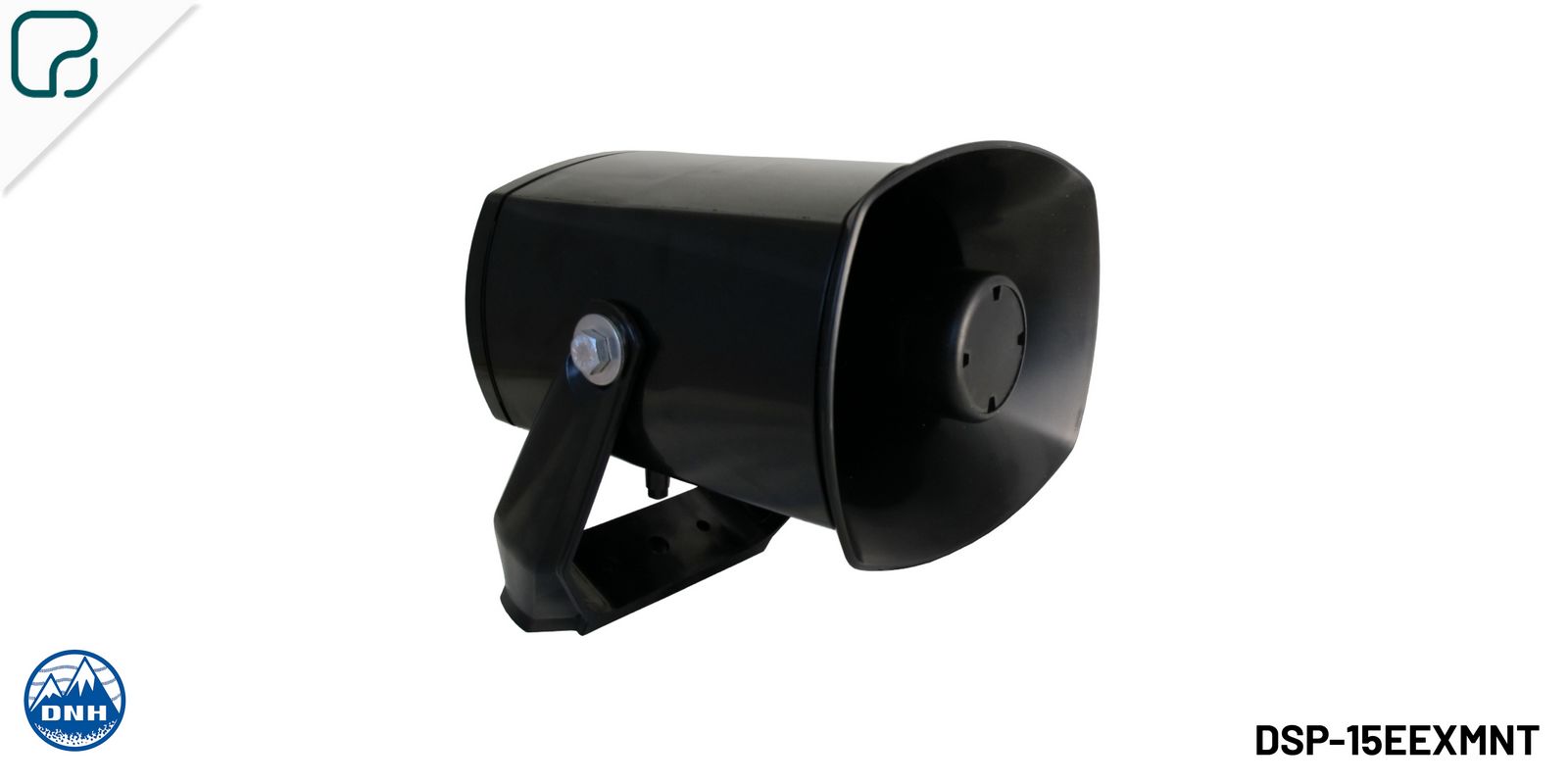
- Power: 25 W RMS, 100 V line (max. SPL 118 dB)
- Construction: Antistatic polyamide enclosure with IP66/IP67 protection rating
- Certification:
- Gases (Zone 1 and 2): II 2G Ex db eb mb IIB+H2/IIC T4 Gb (suitable for all gases, max. 135 °C)
- Dusts (Zone 21 and 22): II 2D Ex tb IIIC T105°C Db (maximum protection against conductive dust, max. 105 °C)
- Temperature range: -50 °C to +60 °C
DSP-25EEXMNT
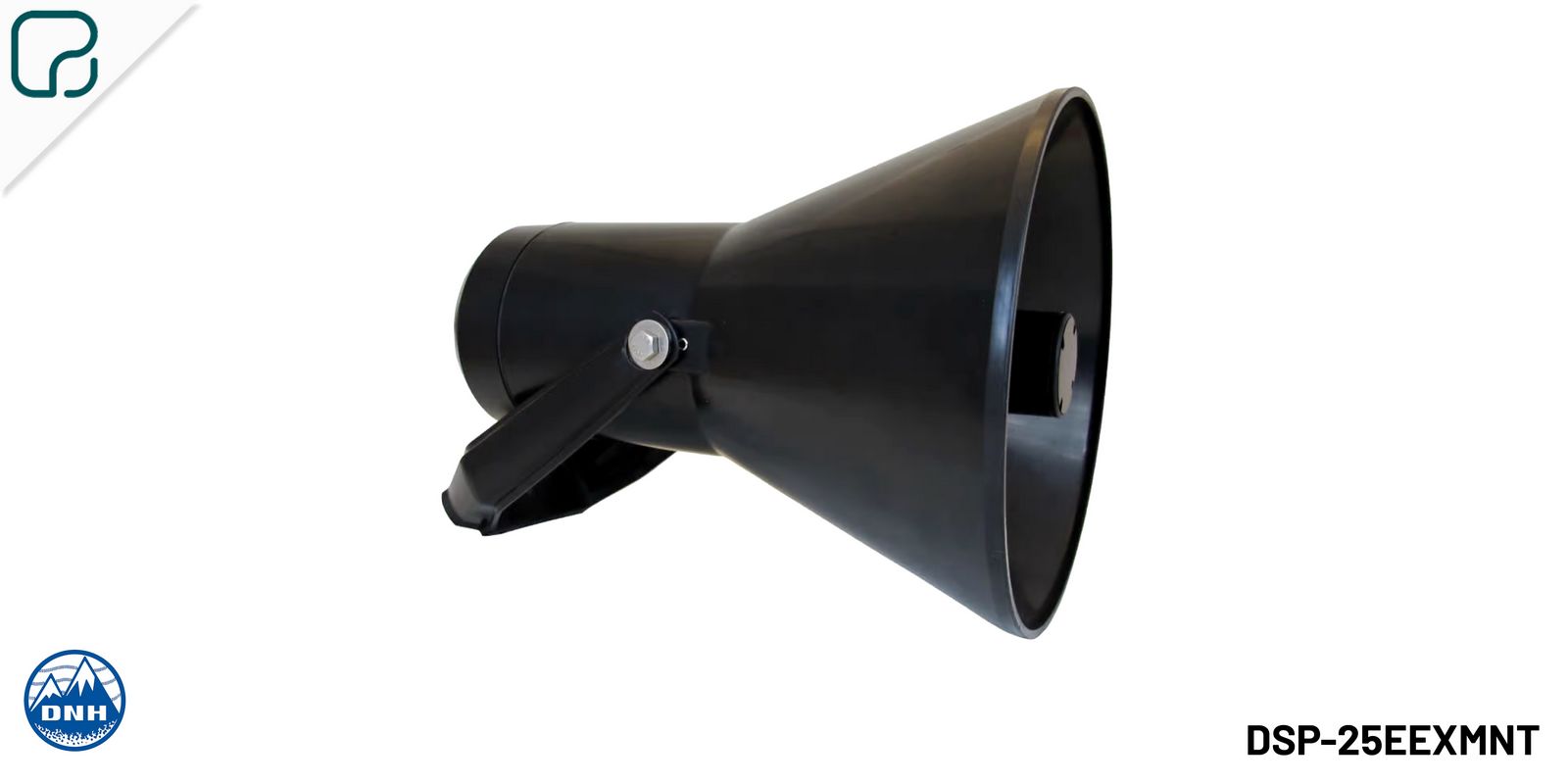
- Power: 25 W RMS, 100 V line (max. SPL 120 dB)
- Construction: Antistatic polyamide enclosure with IP66 protection rating
- Certification:
- Gases (Zone 1 and 2): II 2G Ex db eb mb IIB+H2/IIC T5 Gb (suitable for all gases, max. 100 °C)
- Temperature range: -50 °C to +55 °C
HS-15EEXMNMFT
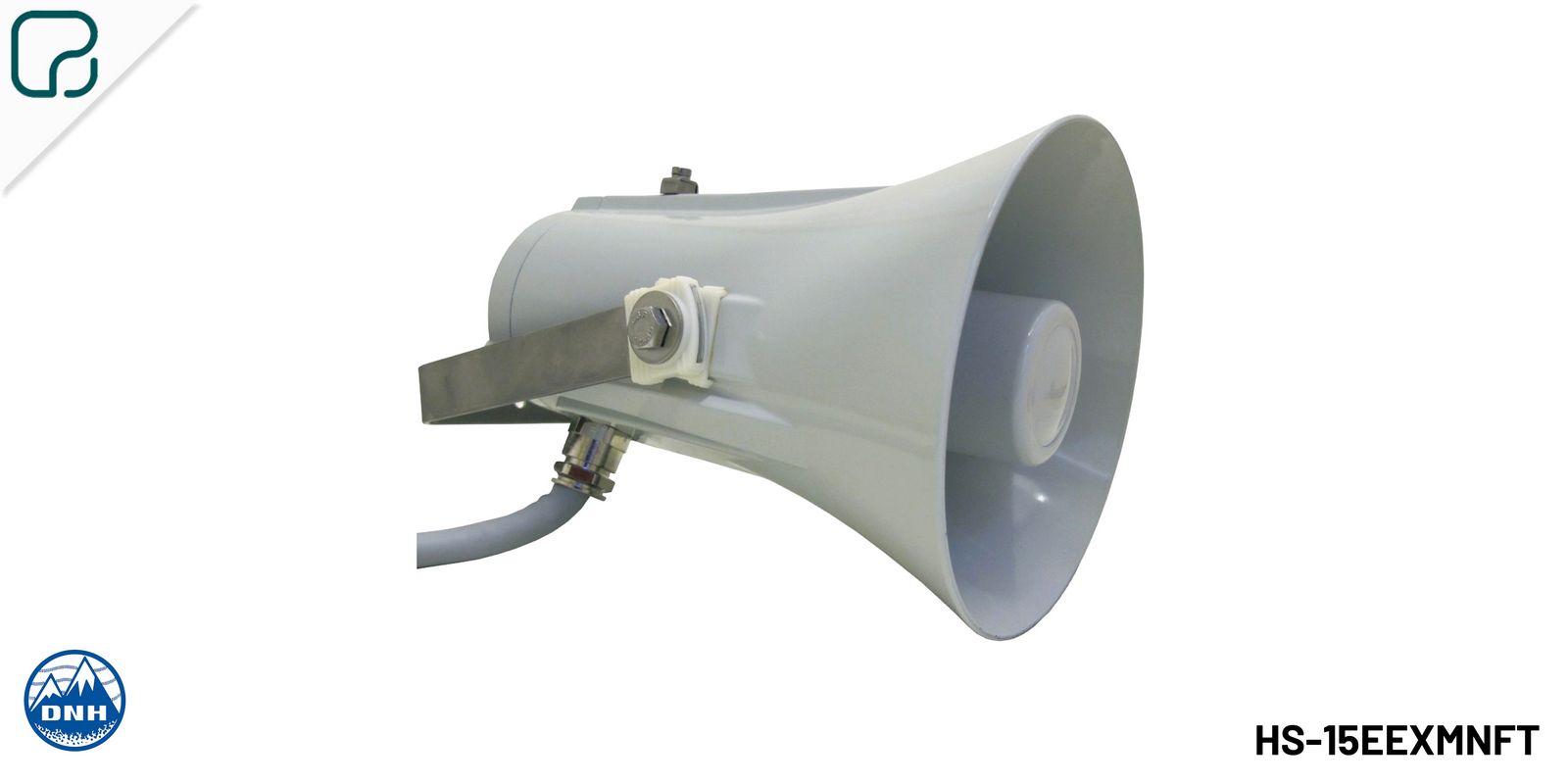
- Power: 15 W RMS, 100 V line (max. SPL 116 dB)
- Construction: Aluminum enclosure with IP67 protection rating
- Certification:
- Gases (Zone 1 and 2): II 2G Ex db mb IIB+H2/IIC T5 Gb (suitable for all gases, max. 100 °C).
- Dusts (Zone 21 and 22): II 2D Ex tb IIIC T84°C Db (maximum protection against conductive dust, max. 84 °C)
- Temperature range: -50 °C to +60 °C
HS-15EEXIINT (Specific for Zone 2)
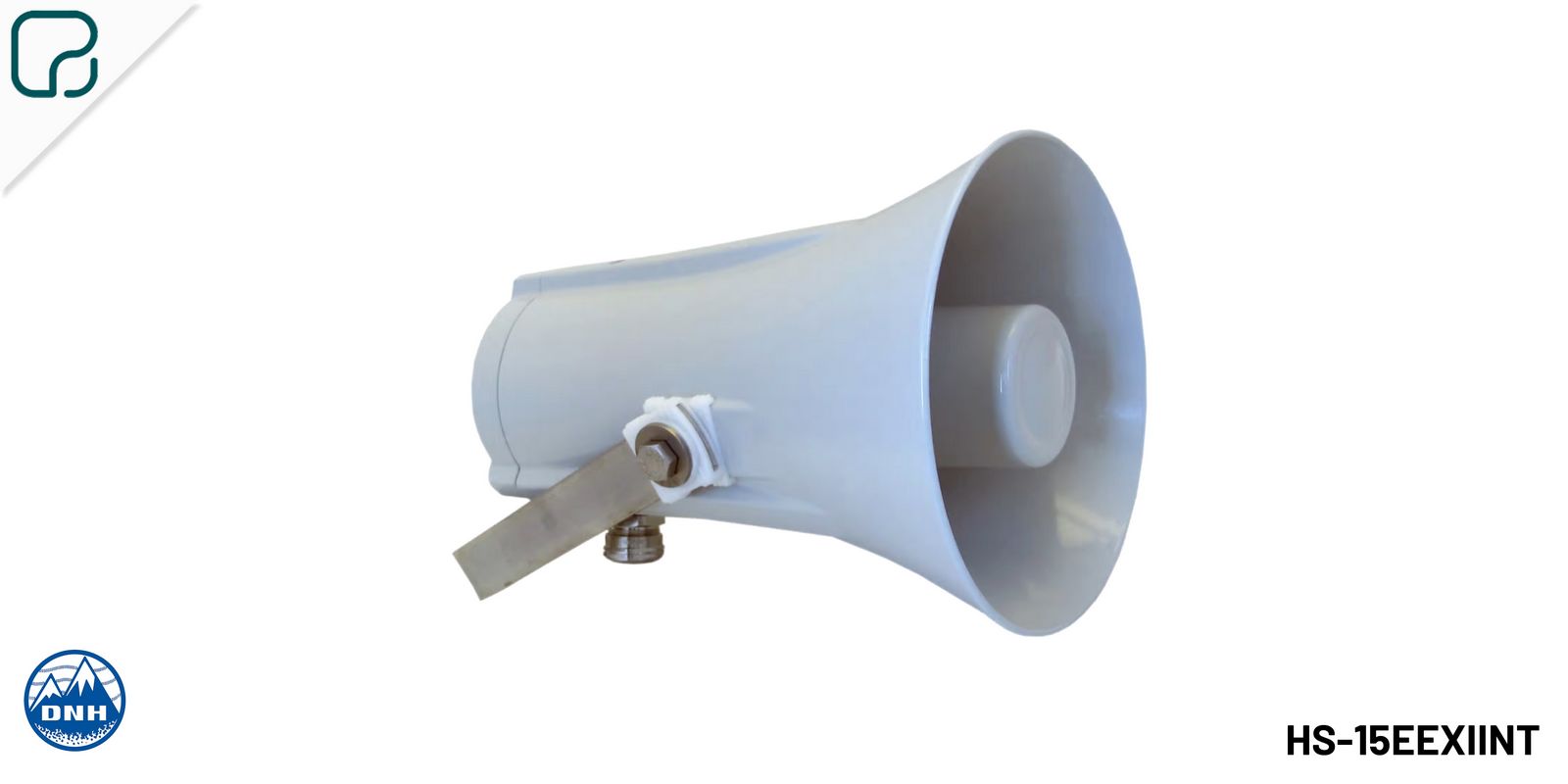
- Power: 15 W RMS, 100 V line (max. SPL 118 dB)
- Construction: Aluminum enclosure with IP67 protection rating
- Certification:
- Gases (Zone 2): II 3G Ex ec IIC T6 Gc (group IIC gases—including hydrogen and acetylene—max. 85 °C).
- Temperature range: -50 °C to +50 °C
Conclusion
Designing an audio or communication system in critical industrial areas requires an analysis that involves not only electroacoustic and functional studies, but also selecting the most appropriate equipment enclosure: verifying that the ATEX code covers the zone and gas or dust type, ensuring that the IP rating will withstand environmental water or dirt, and confirming that the equipment structure (IK) and thermal tolerance will endure daily operations.