
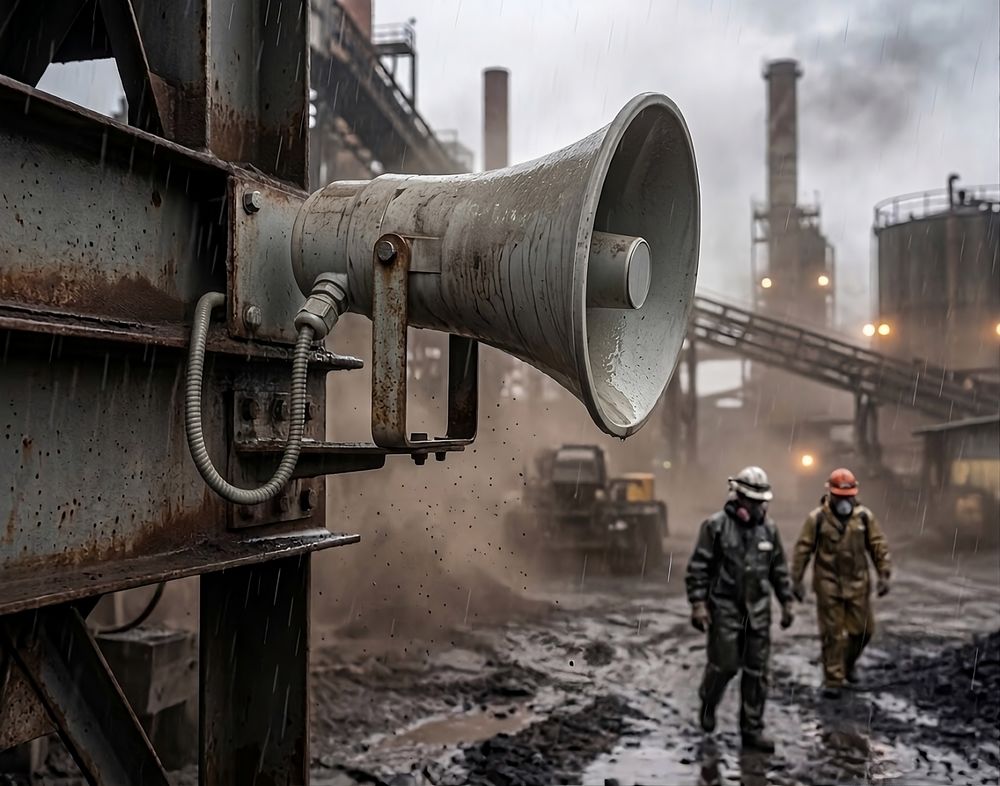
 Promotional image in a simulated environmentIn a public address, voice alarm, or intercom system, not all equipment operates under the same conditions. Central units, matrices, audio processors, or control desks are usually installed in technical rooms or protected spaces. Loudspeakers and intercoms, on the other hand, are field devices: they are distributed throughout different areas of the facility and can be directly exposed to rain, humidity, dust, dirt, or other environmental agents.
Therefore, when selecting a field device, assessing its acoustic or functional features is not enough. It is also necessary to ensure that its construction is suitable for the real conditions of the location where it will operate.
One of the first parameters to consider is the IP protection rating.
What is the IP Protection Rating?
IP stands for Ingress Protection. The IP code classifies the degree of protection provided by an equipment enclosure against the penetration of solid objects and water.
The classification is defined by the international standard IEC 60529 and, in Europe and Spain, by EN 60529 / UNE-EN 60529. The standard establishes a common system so that manufacturers, engineers, integrators, and users can identify an equipment's protection level using a simple code.
For example, the code IP66 provides us with two distinct pieces of information:
- IP identifies the classification system.
- The first digit (6) indicates protection against the ingress of solid objects.
- The second digit (6) indicates protection against water.
It is important to understand that the IP rating describes the protection provided by the enclosure and is not synonymous with "waterproof equipment." Each degree corresponds to specific tests and conditions established by the standard.
How is the IP Protection Rating Certified?
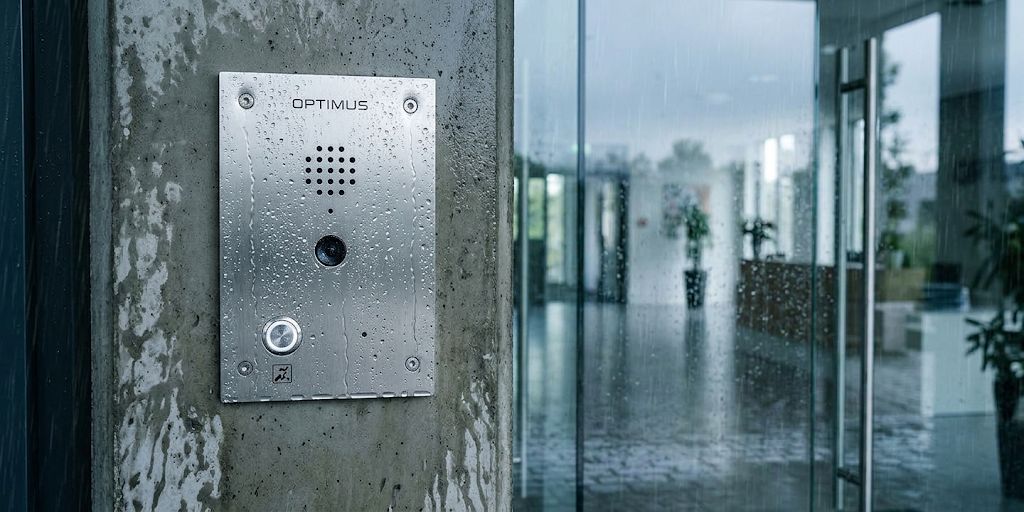 Promotional image in a simulated environmentThe UNE-EN 60529 standard establishes the testing methods and criteria used to determine the degree of protection provided by an equipment enclosure. The results of these tests determine whether a specific configuration meets, for example, the requirements corresponding to IP65, IP66, or IP67.
However, the IP rating should not be understood solely as an isolated feature of the device. In some equipment, especially when the enclosure consists of several components, the degree of protection depends on the specific configuration and proper installation. If an intercom is mounted with a specific backbox requiring a particular sealing system, its declared IP rating corresponds to the complete assembly installed according to the manufacturer's instructions. A different installation, an unspecified accessory, or improper sealing can alter the enclosure's protection performance.
When a manufacturer declares an IP protection rating, official product documentation—especially the installation manual and datasheet—should always be consulted to know the conditions under which this rating is guaranteed. Faced with a specification like IP66, verifying that these acronyms appear on a commercial datasheet is not enough. It is crucial to verify under which configuration and installation conditions the declared degree of protection is achieved.
How Do You Read an IP Code?
The IP code usually consists of two digits: IP XY, where X = protection against solid objects and Y = protection against water.
The higher each digit, the higher the corresponding level of protection.
First digit: protection against solid objects. Ranges from 0 to 6
| Digit | Protection |
| 0 | No protection |
| 1 | Protected against solid objects of 50 mm or greater |
| 2 | Protected against solid objects of 12.5 mm or greater |
| 3 | Protected against solid objects of 2.5 mm or greater |
| 4 | Protected against solid objects of 1 mm or greater |
| 5 | Dust-protected; ingress is not entirely prevented, but it must not interfere with satisfactory operation of the equipment |
| 6 | Dust-tight |
In industrial applications, the difference between 5 and 6 is particularly important. Dust can penetrate equipment and affect connectors, components, membranes, or other internal elements. An IP6X unit, for instance, provides the maximum specified protection level against dust.
Second digit: protection against water. Ranges from 0 to 8 and describes different levels of exposure to water:
| Digit | Protection |
| 0 | No protection |
| 1 | Vertically falling water drops |
| 2 | Water drops falling at an angle |
| 3 | Spraying water |
| 4 | Splashing water |
| 5 | Water jets |
| 6 | Powerful water jets |
| 7 | Temporary complete immersion |
| 8 | Continuous complete immersion under conditions specified by the manufacturer |
The IP rating must be chosen based on the environmental agent the equipment will actually have to endure. For example, IP23 if it only needs to be rainproof, IP44 for bathrooms or showers, IP54 for dust and water resistance, IP65 for dust protection and water jets (e.g., from a hose)... up to IP67 or IP68 for submerged equipment.
What IP Rating Does a Loudspeaker or Intercom Need?
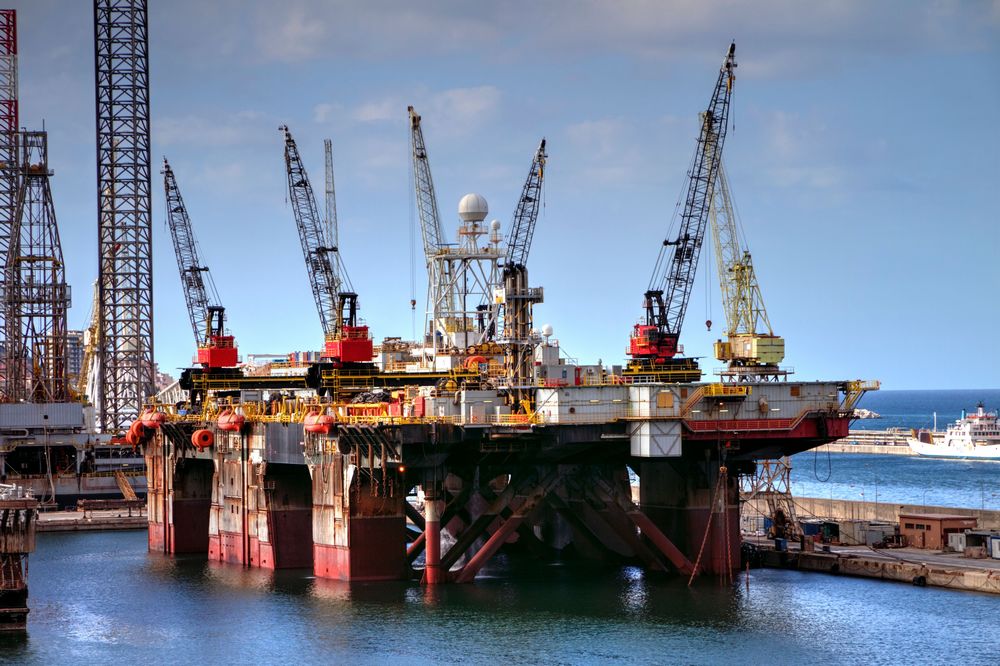 IP66 and IP67 equipment will be installed on an oil rigThis is an important question from a project design perspective. There is no single IP rating that is universally suitable for all loudspeakers or intercoms. The required rating depends on the installation conditions. Equipment installed in an office, for example, does not have the same requirements as an intercom located at a factory entrance or a loudspeaker installed on an offshore platform.
In an outdoor installation, the following factors must be evaluated, among others:
– Direct exposure to rain
– Intensity and direction of water jets
– Ambient humidity
– Dust and airborne particles
– Dirt and grime
– Cleaning procedures
– Risk of flooding or temporary immersion
– Temperature and climatic conditions.
It is not a matter of choosing the loudspeaker with the highest IP rating, but rather answering the question: What environmental conditions will the equipment have to endure throughout its operational lifespan? Based on this answer, the necessary degree of protection can be determined.
The IP Rating Does Not Solve Everything
IP is a fundamental parameter, but it does not describe all the physical conditions a field device might encounter. A loudspeaker may have an IP66 rating and be perfectly protected against dust and water jets, but this does not necessarily mean it is suitable for an industrial plant where there is a risk of mechanical impacts, a potentially explosive atmosphere, or extreme temperatures.
Therefore, when selecting a loudspeaker, protection rating is not the only parameter to consider; other variables can be even more decisive. In such cases, additional features must be evaluated:
- IK Rating: Determines the enclosure's resistance to external mechanical impacts. It is particularly relevant for intercoms installed within human reach.
- ATEX: Essential when equipment must operate in areas with potentially explosive atmospheres.
- Operating Temperature: Certain environments, such as freezing chambers, refrigeration facilities, kilns, or steel manufacturing processes, may require equipment capable of operating outside standard temperature ranges.
- Corrosion and Marine Atmospheres: Continuous exposure to humidity, salinity, or chemical agents may require specific construction materials even if the device features a high IP rating.
Some OPTIMUS Solutions
In public address and voice alarm systems, loudspeakers are typically the components most exposed to environmental conditions.
For outdoor installations, OPTIMUS offers various solutions with high protection ratings, such as IP66 or IP67 horn loudspeakers and IP66 sound projectors for general outdoor use.
As an example of solutions for particularly demanding applications, the AEI-12T IP67 horn loudspeaker is suitable for marine or high-humidity environments. For projects with extreme environmental conditions, OPTIMUS also supplies specialized solutions from manufacturer DNH, featuring horn loudspeakers that reach IP67 (and even IP68 in the case of the AQUA30 underwater speaker), available for applications with very broad temperature ranges.
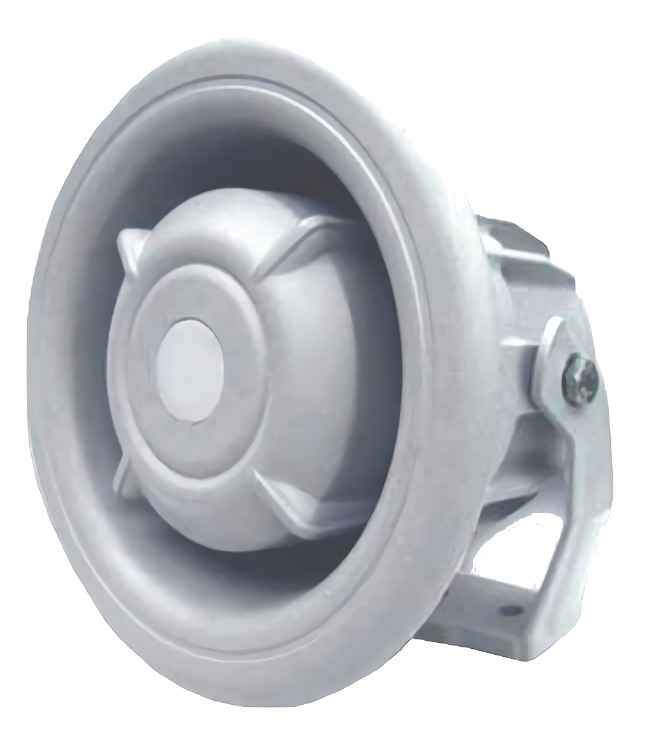 AEI12T Horn Loudspeaker (IP67)
 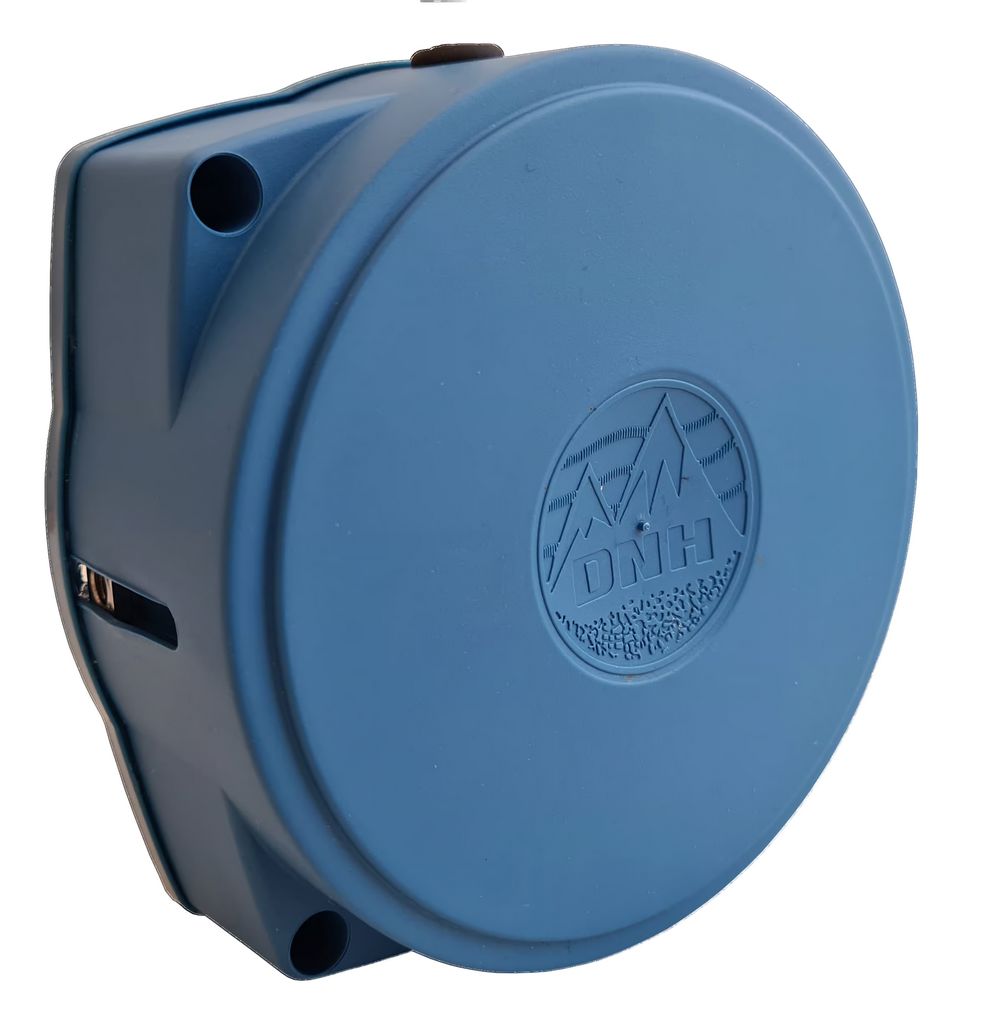 AQUA30 Underwater Loudspeaker (IP68)
In intercom systems, the protection rating is also a key criterion when selecting the right unit. OPTIMUS's EP series, featuring a specialized sealing system, achieves up to IP66, while the catalog also includes other manufacturers and ranges providing protection levels up to IP67 for especially harsh environments.
Selecting the Right Equipment Starts with Understanding the Environment
Selecting a loudspeaker or intercom is not just about choosing power output, frequency response, connectivity, or available features. When equipment operates as a field device, its ability to withstand the environment is an integral part of its performance specs.
The IP rating gives us a standardized initial tool to determine whether an equipment enclosure is prepared to handle dust and water exposure. However, in demanding installations, it is necessary to go further and analyze impact risks, temperature ranges, corrosion factors, explosive atmospheres, and all other physical constraints of the project.