The microphone is the transducer that converts acoustic energy into electrical energy. Pressure variations act on a membrane, causing it to vibrate, ultimately producing electrical voltage.
In a microphone's specifications table, the most relevant information is:
| Sensitivity | Relationship between input acoustic pressure and output electrical voltage (mV/Pa or dB at 1 kHz and 1 mbar). |
| Frequency response | Microphone behavior for each frequency. |
| Directionality | Microphone behavior depending on the angle at which the sound hits. |
| Impedance | Resistive load that limits the flow of current and absorbs maximum power. |
Microphones can be classified in several ways. For example, according to their directivity, there are omnidirectional, unidirectional, cardioid, superdirectional microphones... A common classification is based on the acoustic-to-electric energy conversion system. The most commonly used are electrodynamic, electrostatic, and piezoelectric.
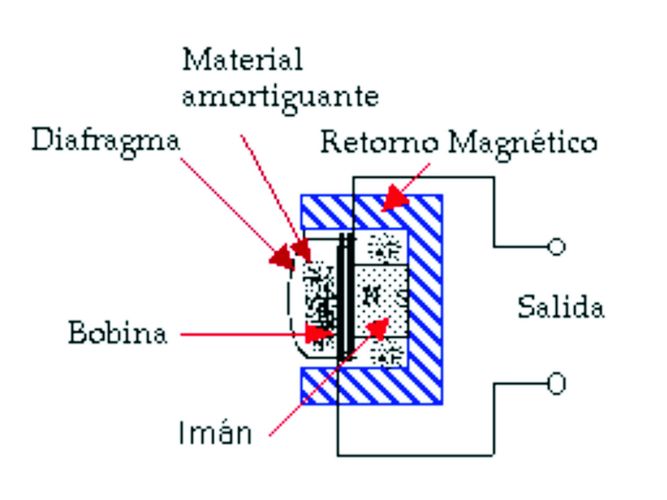
- Electrodynamic: A permanent magnet generates a magnetic field around a coil connected to a vibrating membrane. The acoustic pressure received generates a proportional electromotive force in the coil. They are widely used because they are simple, durable, and inexpensive. They can work with high sound pressure levels and do not require a power supply.
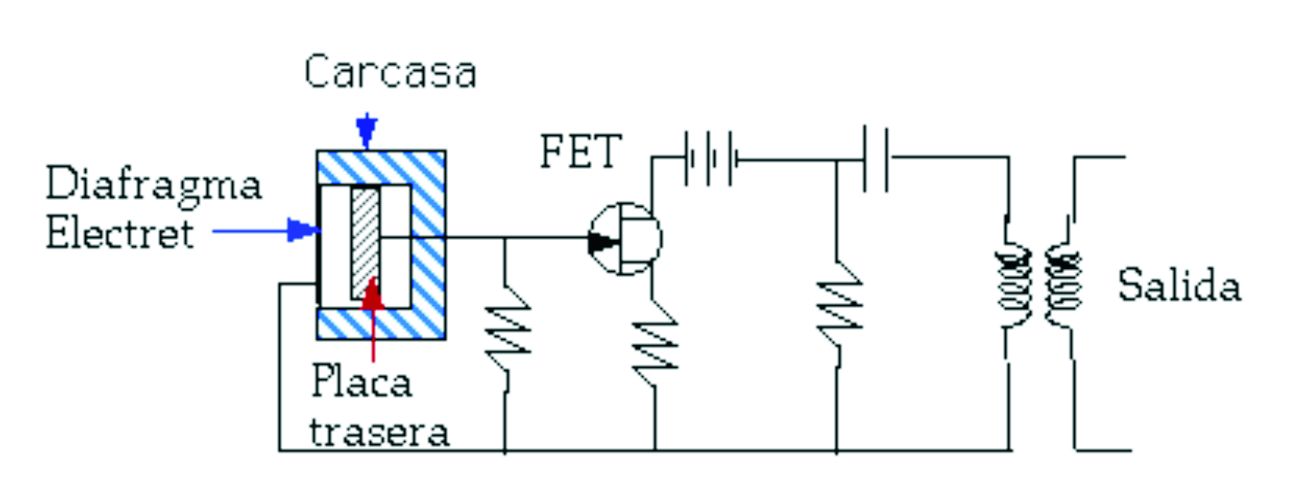
- Electrostatic: These have a diaphragm that moves depending on the acoustic pressure, varying the capacitance of a capacitor it forms with a fixed plate in the microphone. The electrical voltage is proportional to the stored charge. These include condenser or electret microphones. They have a better high-frequency response, are more sensitive, smaller in size, and require power, either through an external power supply or phantom power.
- Piezoelectric: There are also diaphragms that vibrate based on acoustic pressure. They transmit the movement to the material inside (quartz, carbon, etc.), and the friction between their particles generates electrical voltage on their surface. They are rarely used due to their uneven frequency response.
There are other classifications that no longer depend on the technology used in their construction or their electroacoustic characteristics. For example, according to the added features (e.g., in microphone desks), the format (flexible, flat, etc.), or their connection (wireless). One type of microphone or another is used depending on the needs of the sound system. In PA systems, the most common microphone types are:
| Microphone desks with gong / with zones / with control |
| Handheld microphones |
| Flat microphones |
| Gooseneck microphones |
| Lavalier microphones |
| Microphones Wireless handheld / lavalier / headset microphones |
| Microphones for conference systems |