In other articles, we've discussed the main recommendations used in PA systems for their distribution and, therefore, for calculating the required number of speakers. Experience can directly resolve many situations, but on more than one occasion, acoustic simulation will be necessary to fine-tune and determine the best solution through successive approximations.
Remember that the first step in determining the required number of speakers is to appropriately select the type(s) of speaker for each room to be soundproofed. Only after knowing this number can we continue with the project, calculating the required power and configuring the rest of the installation.
Example
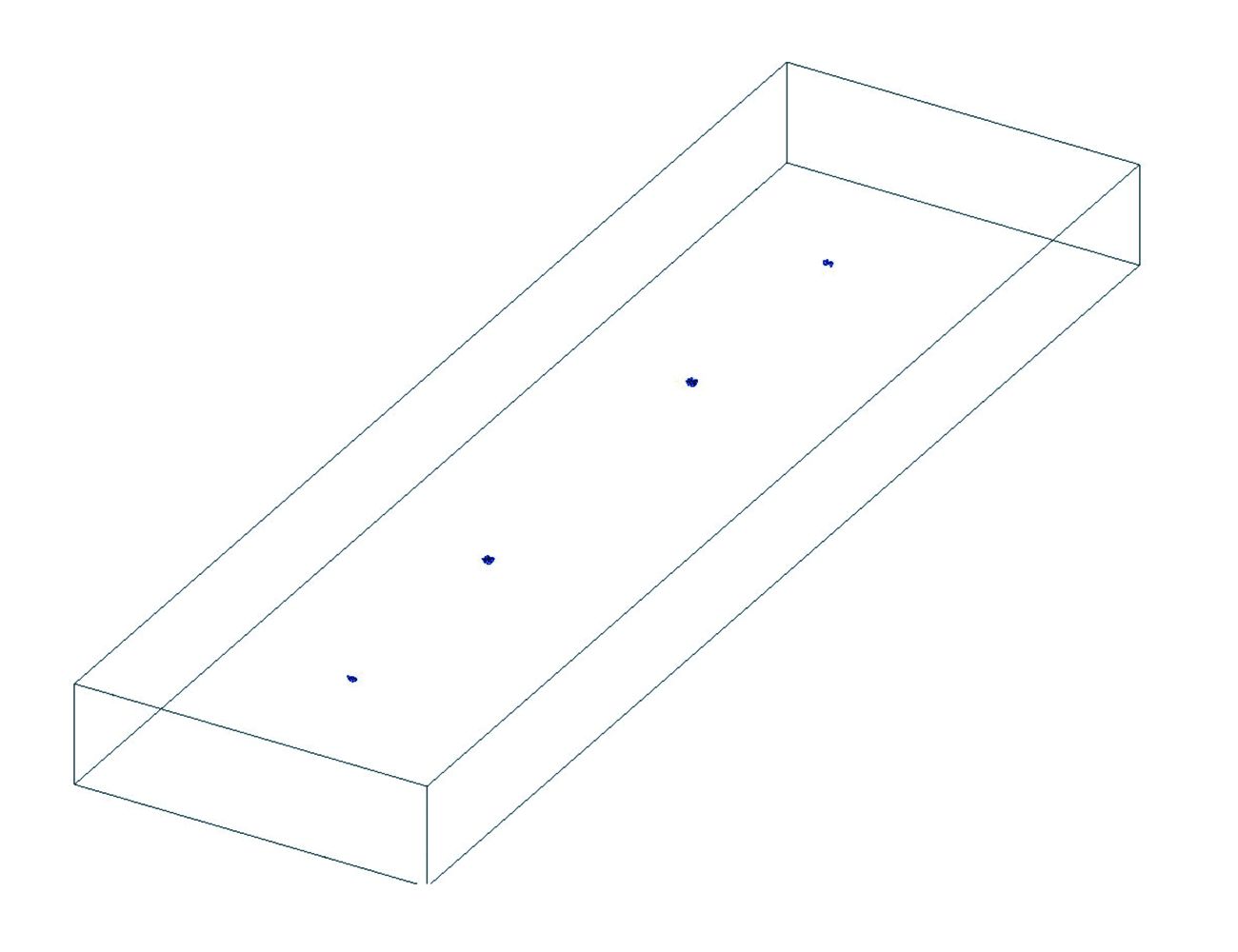
The plan is to soundproof a 90 x 30 m venue with two possible solutions: one with acoustic projectors and the other with exponential loudspeakers. The noise level is 60 dB SPL.
This is a 2,700 m2 space, and we have no data other than the ambient noise level of 60 dB SPL, which leads us to seek sound pressure levels above 75 dB to ensure intelligibility, which is provided by both projectors and exponential loudspeakers.
The acoustic projectors provide a maximum SPL of around 105 dB, and the exponential loudspeakers around 125 dB. This difference in sound pressure allows the exponential loudspeakers to be placed higher, covering more space. This would be the general recommendation for a 60 dB SPL noise level:
Sound projector installed between 3 and 5 m, one every 120 m2: total 23 units
Horn speaker installed between 4 and 6 m, one every 310 m2: total 9 units
Example
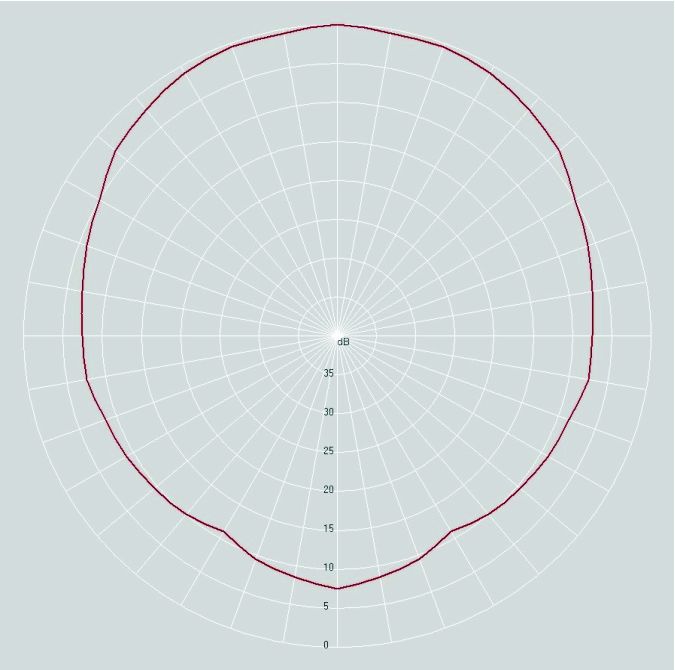 12 sound projectors (20 W RMS, sensitivity 93 dB SPL) in two groups of four units (360º) plus 2 groups of two units (180º).
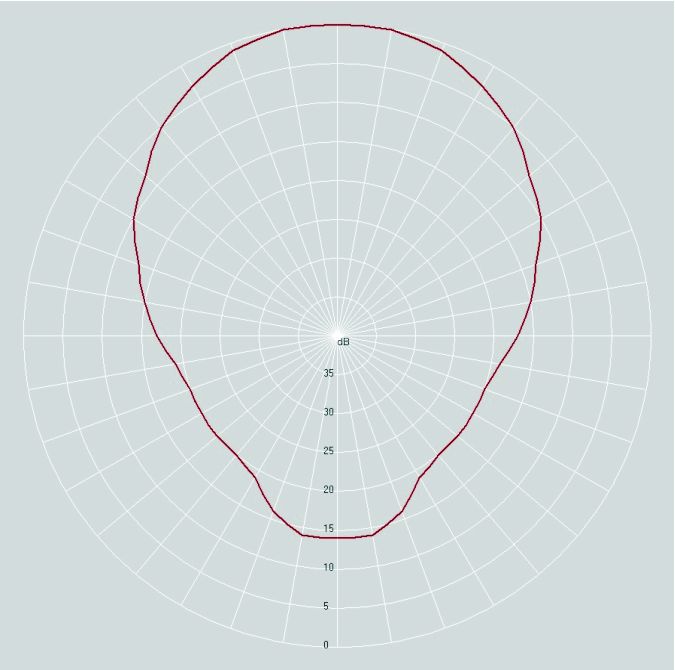 10 horn speakers (30 W RMS, sensitivity 109 dB SPL) in two groups of three units (360º) plus 2 groups of two units (> 180º).
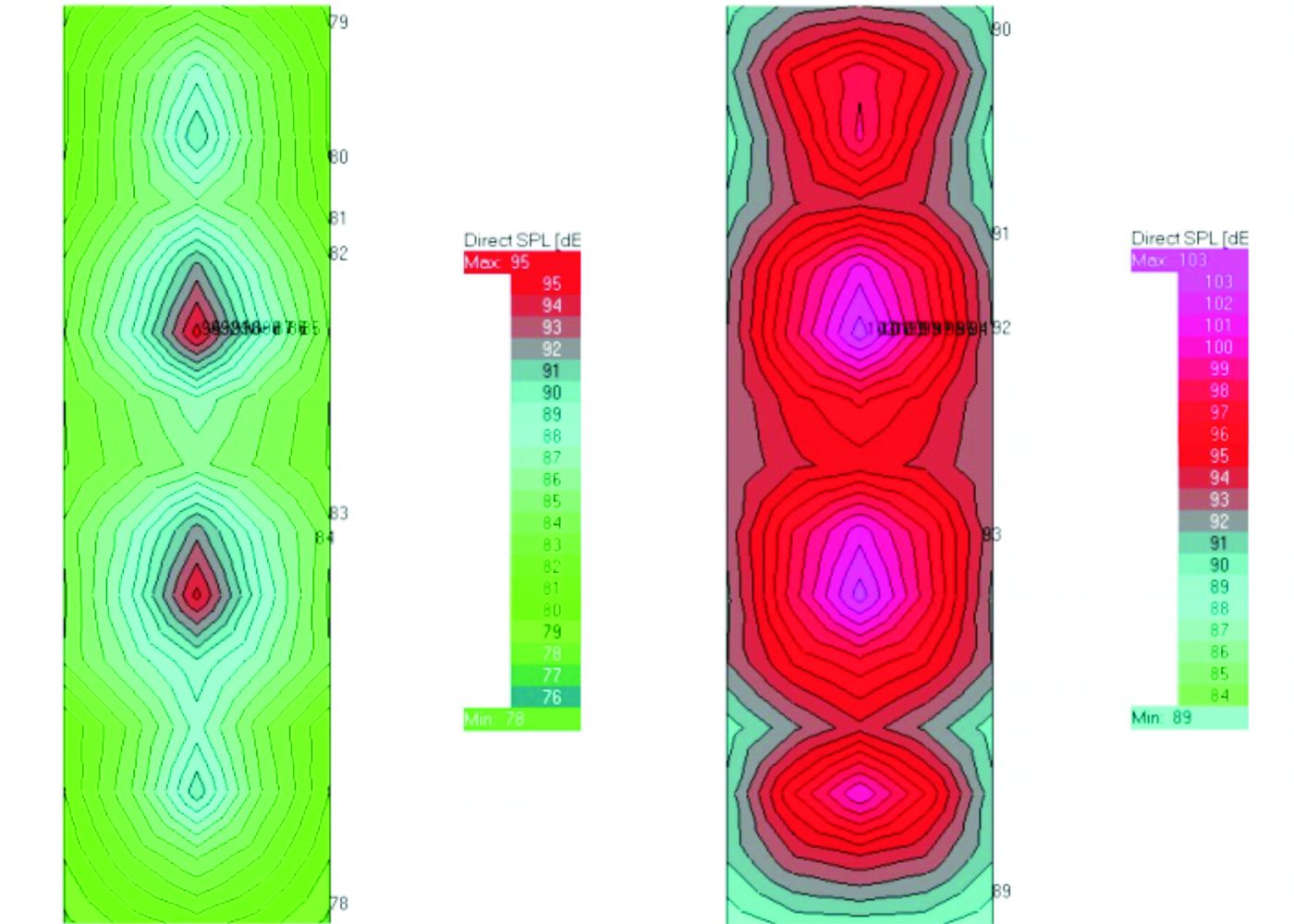
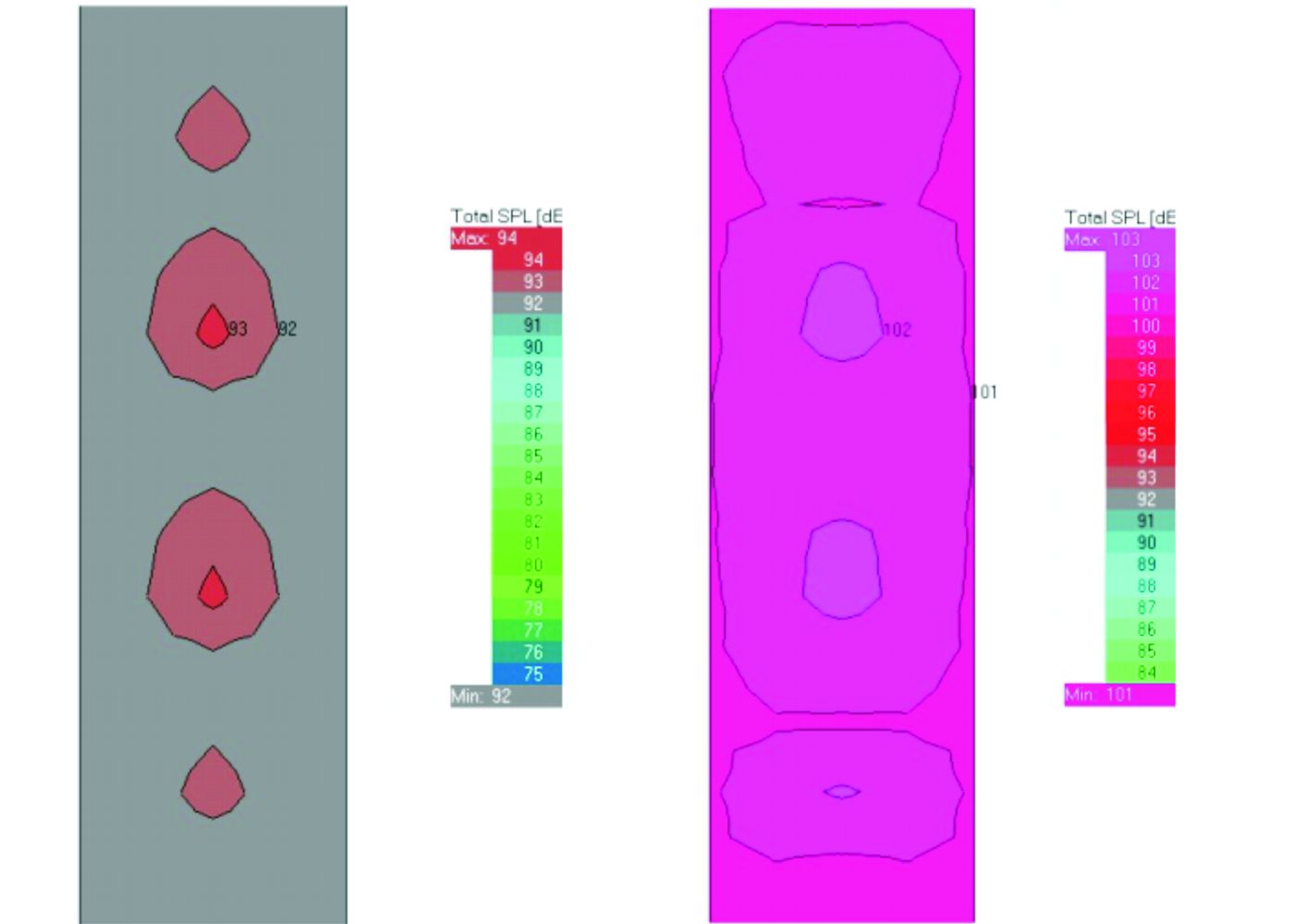
First, the sound pressure level (SPL) is calculated, in direct and total field:
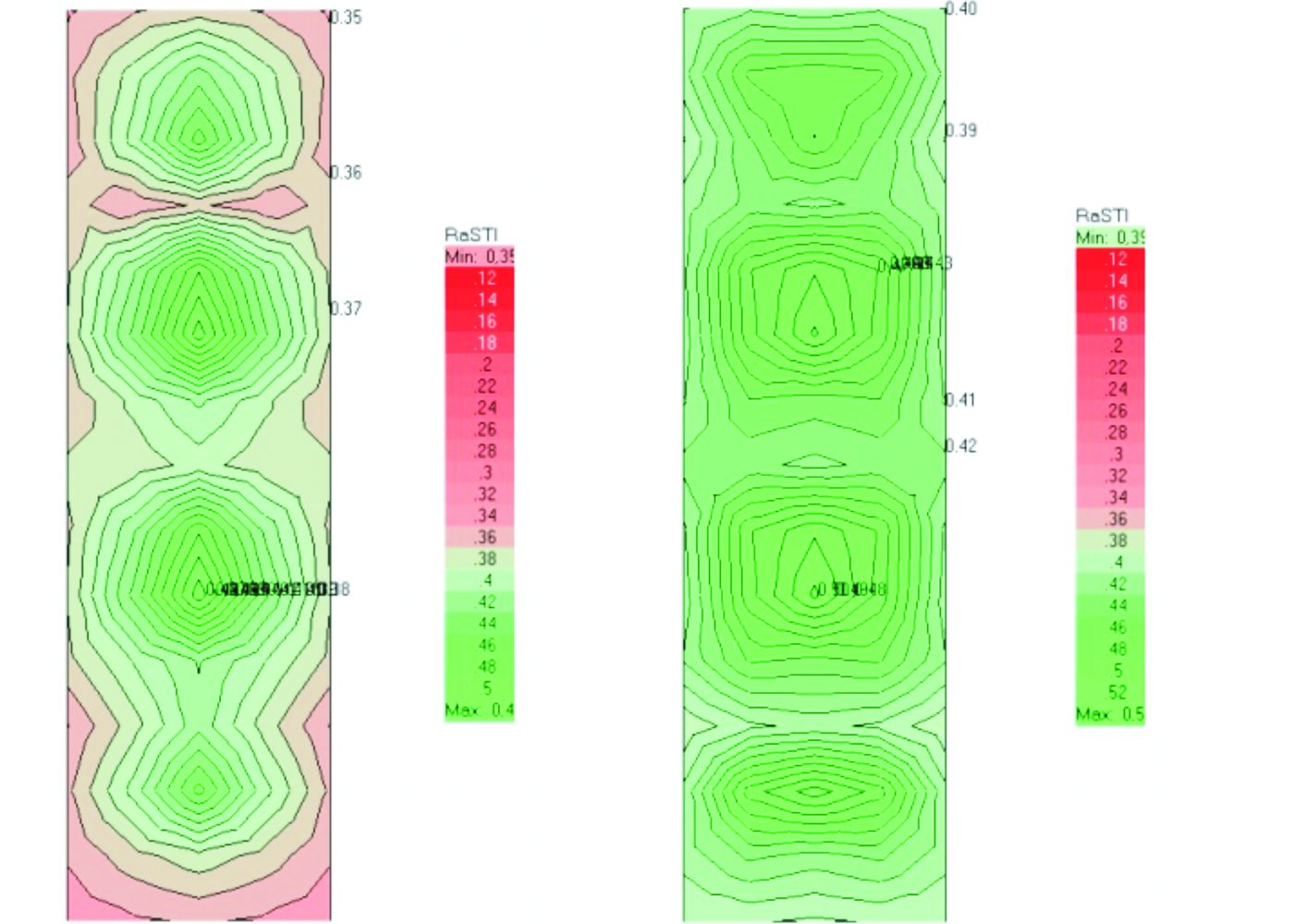
Intelligibility is then calculated.
CONCLUSIONS
The acoustic coverage is uniform, with a total SPL variation of less than 1 dB.
With 10 W of speaker power, the sound projector guarantees an SNR > 12 dB, and the horn speaker guarantees an SNR > 21 dB. Noise is considered to be <80 dB.
Horn speakers provide better SPL, intelligibility, and protection, and are therefore the best option.
However, if you want to improve frequency response and are willing to accept the cost of increasing the power applied to each sound projector, or its quantity, to ensure an SNR of at least 15 dB, the sound projector solution is a good alternative.