The design of a PA system doesn't end with the theoretical acoustic study. Once the venue is known and the best acoustic solution is determined, it's time to define the system's functions, select the equipment, consider the impact of aesthetic factors, architectural constraints, regulations, the final system configuration, and its wiring. This phase can sometimes be much more complex than the acoustic study itself.
For example, a church may be acoustically very complex, but the final equipment will consist of acoustic columns, two microphones, an amplifier, and a feedback suppressor. In contrast, a department store poses no acoustic difficulty, given that it will all be ceiling speakers in a 6 x 6 grid. On the other hand, there will be great complexity in managing commercial messages, evacuation announcements, the various control microphones, and speaker zones.
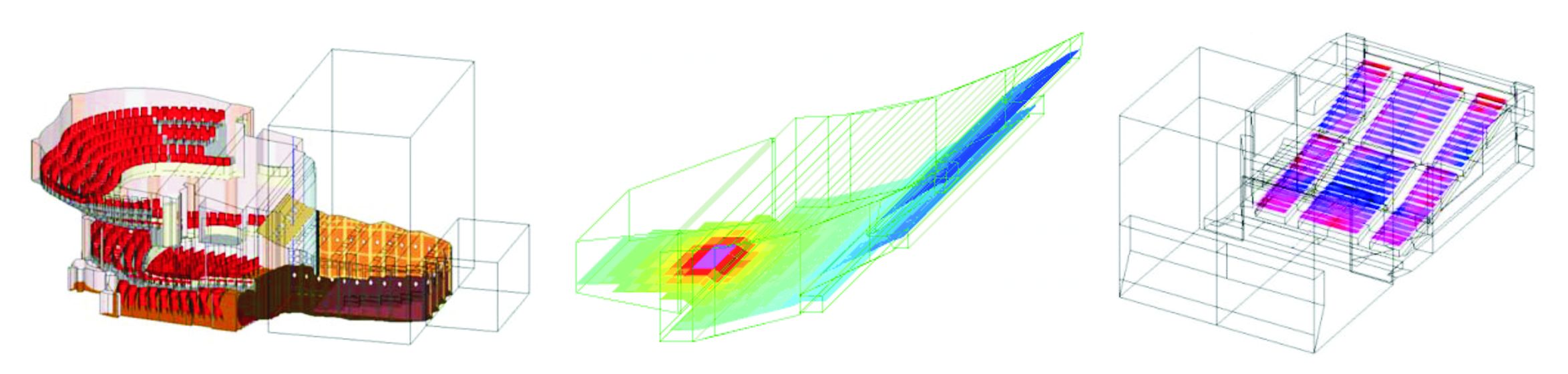
The methodology for conducting acoustic studies includes the following phases:
- Evaluating the venue's characteristics and entering data.
- Calculating acoustic parameters.
- Selecting the type and number of speakers.
- Selecting PA system features.
- Finalizing and configuring the system.