
PA and intercom systems in rail transport aren't standalone products. What the passenger hears on the platform has to carry on seamlessly into what they hear inside the train. And what the driver announces from the cab has to reach every carriage with the same clarity as a message from the control centre. OPTIMUS covers that entire chain with two offerings designed natively for the rail sector: OPTIMAX3 for stations and networks, and the On-Board range for the vehicle.
OPTIMAX3: the IP platform for rail infrastructure
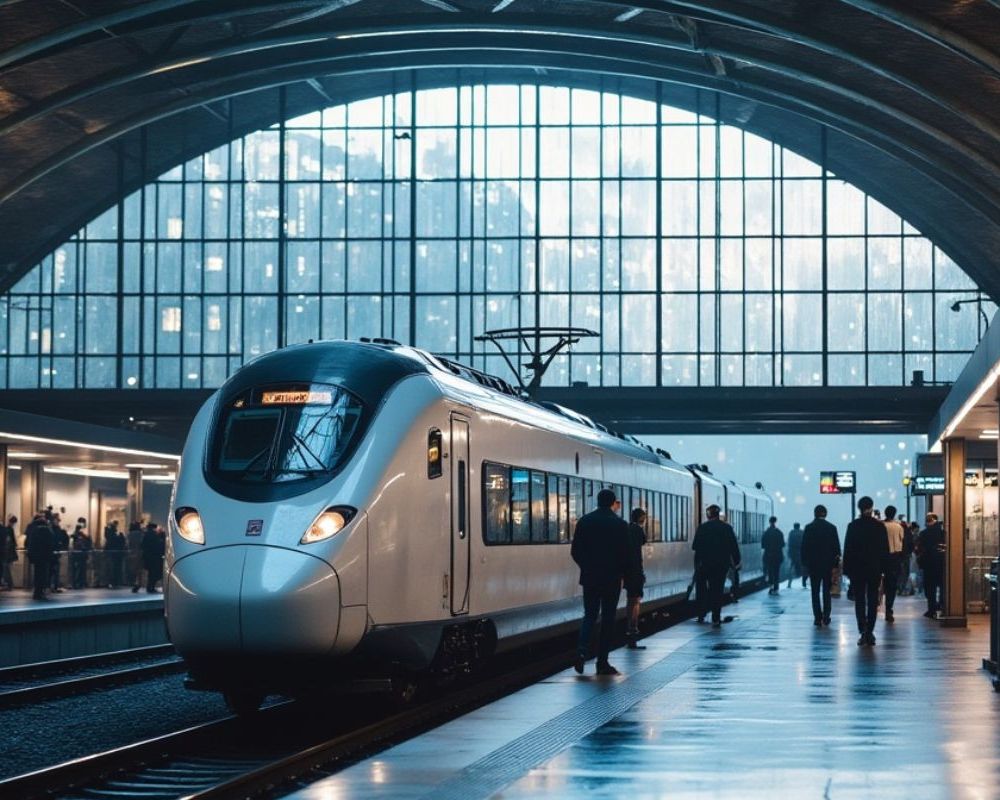 OPTIMAX3 is the IP platform designed for rail transport infrastructure. It brings together more than 30 years of experience in some of the sector's most demanding installations: Mass Rapid Transit (MRT), Light Rail Transit (LRT), and conventional rail networks around the world.
The design is modular and scalable. OPTIMAX3 supports centralised or distributed configurations depending on the project's needs, from a single station to a national network linked through the corporate data network. It can be used to design a completely new PA solution, or to turn an existing conventional system into an IP one without replacing the entire infrastructure.
At the heart of the system sits theUMX-03, digital matrix, which handles four simultaneous IP audio channels, with a 16-channel internal bus and 16 GB of internal memory for pre-recorded messages. The UMX-03 features contacts for fire alarm systems, continuous line supervision, and connection to noise sensors that adjust audio volume based on ambient noise levels.
Built on this base, OPTIMAX3 supports a range of configurations to suit each project. The IF-822ETH and IF-804ETH interfaces convert conventional PA systems into IP systems, allowing existing equipment to be reused. The IF-8P4ETH combines power and IP control in a single unit, with capacity for up to four Class D amplifiers of up to 460 W per channel, hot swapping, and continuous A/B line supervision. The IF-8P4/0E expansion units allow the power to be scaled up without changing the architecture.
One thing that sets OPTIMAX3 apart is how far it can be customised. When a project calls for specific integrations or functions that aren't covered by the standard hardware, OPTIMUS adapts the existing hardware or develops new hardware and software from scratch to meet the specific needs of the installation. That flexibility is possible thanks to OPTIMUS's in-house engineering, which keeps full control of platform design, development, and manufacturing.
OPTIMAX3 is aligned with EN 54 requirements for voice alarm systems and is now one of the reference platforms in rail safety. Recent projects that demonstrate what it can do includel Adif Stations Neuronal Centre (CNE) in Valdebebas (Madrid), from which communication across the Spanish rail network is coordinated, and the Felipe Ángeles Train (Mexico City), connecting the city centre with Felipe Ángeles International Airport across eight stations equipped with OPTIMAX3.
The On-Board range: PA and intercom for the vehicle
The OPTIMUS On-Board product range is the system for the interior of the vehicle: carriages and passenger service areas. It's made up of three product families designed to work together on a network under IP/SIP protocols.
In the following video, Ferran Gironès, director of Large Scale, presents the equipment in the on-board range.
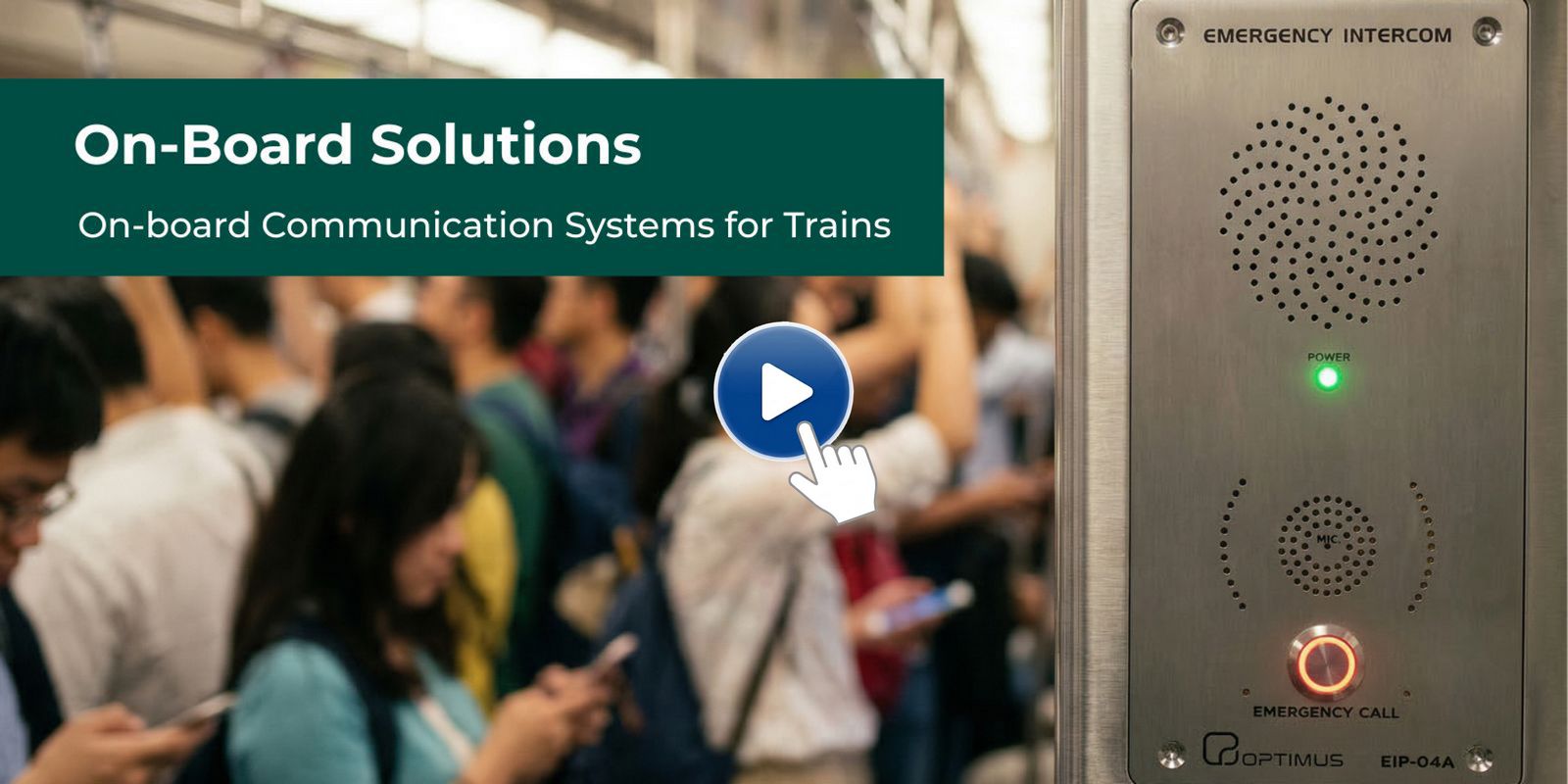
- Driver's Unit is the cab unit. It covers three communication functions: PA announcements to passengers, intercom between cabs on the same train, and communication with the control centre. The different microphone types used (gooseneck, handheld, and others) are built to stand up to the heavy use of the rail environment.
- Passenger Emergency Intercom Unit is the emergency intercom unit for passengers. It allows direct communication with the driver or the control centre in the event of an incident. It features active noise suppression to improve intelligibility in environments with vibration and high noise levels, operates in true full duplex (which allows natural conversation without turn-taking), and is compatible with peer-to-peer or proxy server topologies depending on the project's needs.
- On-Board IP Amplifiers are the vehicle's power amplifiers, connected directly to the IP network. They feature a dual architecture with automatic backup: if the main amplifier fails, the backup takes over without any interruption to service. They connect to automatic noise sensors distributed throughout the vehicle, which adjust the audio volume to match ambient noise levels, replicating inside the passenger carriage the same principle that noise sensors apply in the station. They run at over 90% efficiency and continuously monitor all their parameters and alarms.
The entire On-Board range can be customised, both mechanically and functionally, to the specifications of each project, from physical adaptation of the cab consoles through to bespoke audio programming. OPTIMUS adapts the standard hardware or develops new project-specific versions when needed. It's standard practice in the rail sector, where each manufacturer has its own requirements.
A proven track record in rail transport
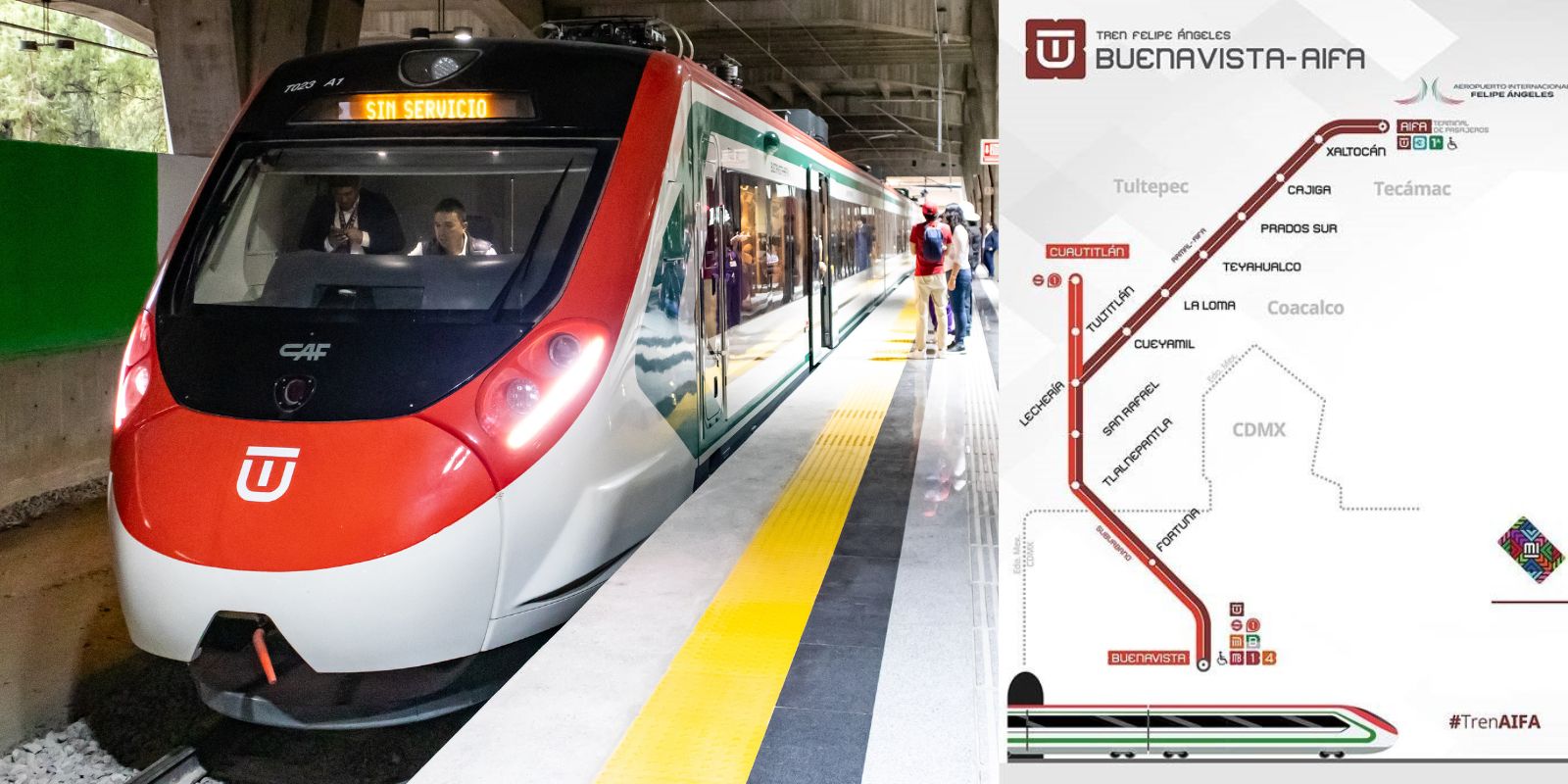 OPTIMUS has spent decades equipping rail transport lines around the world. The track record spans projects in Asia (the RK line in Kaohsiung, Taiwan; Singapore's Mass Rapid Transit), the Americas (the Felipe Ángeles Train in Mexico; the Lima and Callao Metro; Montreal's Réseau express métropolitain) and Europe (Adif's Central Station Hub, Ferrocarrils de la Generalitat de Catalunya, Lithuanian Railways, and København H for DSB in Denmark).
Each project comes with its own local regulatory and operational context, but they all share the same OPTIMUS design principle: distributed architecture, built-in redundancy, adaptation to real operating conditions, and technical support direct from the manufacturer.
A complete offering, from the platform to the carriage
OPTIMAX3 is the platform for stations and networks; the On-Board range is the system for the vehicle. Two complementary offerings that cover the full audio chain in rail transport.
Both are built specifically for the sector, with the same underlying approach: redundancy, scalability, and adaptation to real operating conditions. That level of demand from the outset is also what makes OPTIMAX3 the OPTIMUS reference for other sectors that call for the same resilience: distributed industrial complexes, port infrastructure, and corporate campuses.
Innovating for tomorrow's challenges. It's the approach that lets us deliver projects with technology built to last and grow.
Have a rail project at the design stage? Get in touch. We'll go through the specifics and put together a system that fits.