The device that amplifies the audio signal to the speakers is the power amp or power unit. However, there are devices that combine the preamplifier and the power amp in the same chassis; these are called amplifiers, and it's common to refer to both generically as amplifiers.

amplifier

power amp or power unit
Input and output signals
Signals are typically delivered to a power amplifier from the preamplifier at a level of 0 dB and an impedance of 600 Ω. They may have a program input (usually the music signal) and a priority input (for live or pre-recorded messages). There is no defined standard for connectors; terminal block, DIN, RJ45, etc.
The power output on 100 V line amplifiers is usually via terminal block. In addition to the 100 V output, a 70 V and/or 50 V output may be available, as well as a low-impedance output of 4 to 16 Ω.
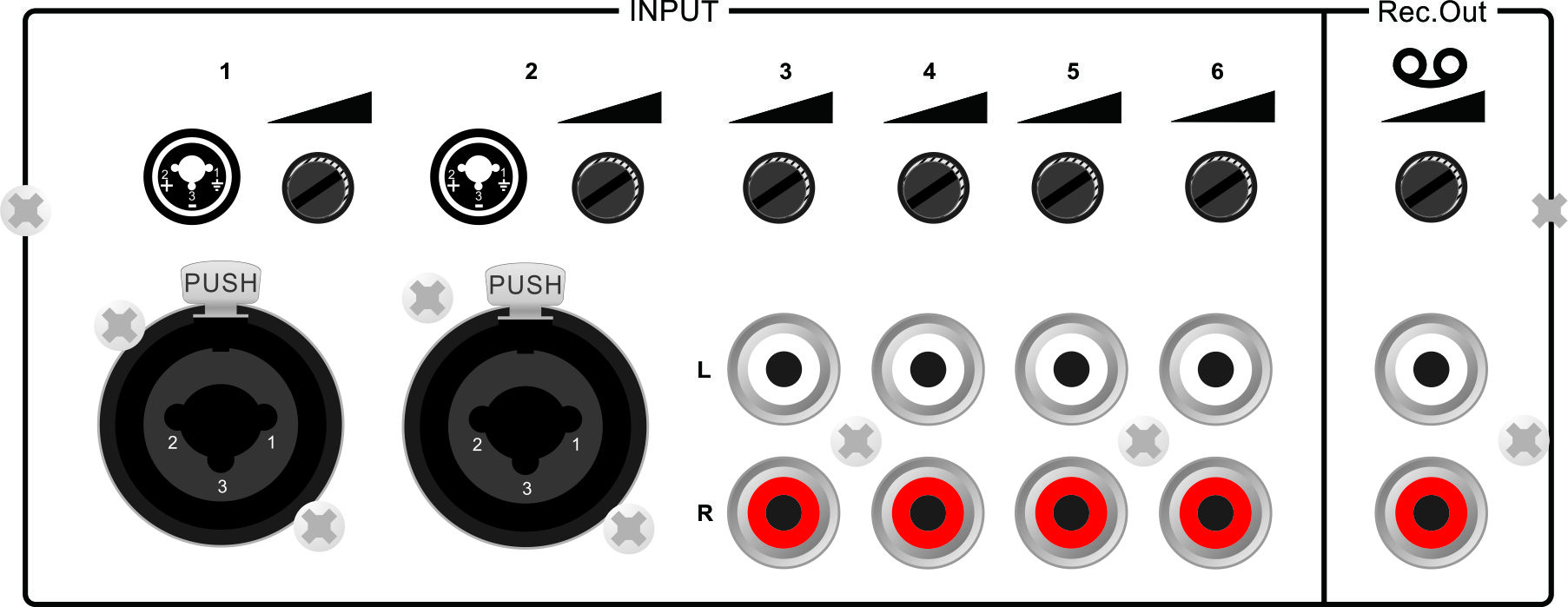
inputs
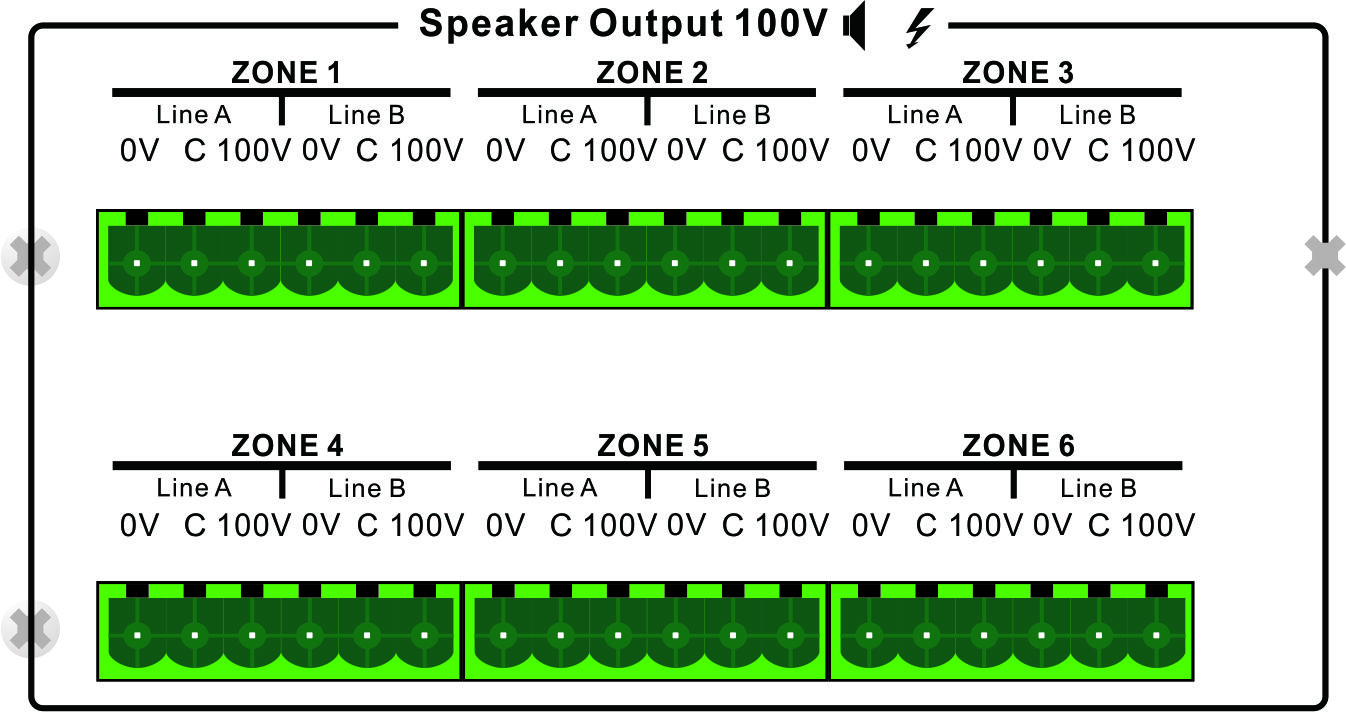
outputs
Amplifiers specify RMS (root mean square) power, the average square value obtained by applying a 1 kHz sinusoidal signal to the input. This is the maximum continuous power and serves as a reference when connecting speakers. IHF (Institute of High Fidelity) power can also be specified. This power is 35 to 50% higher than RMS and specifies the maximum power the amplifier can provide during a transient peak. Finally, regarding the technology used and energy efficiency, class A/B and class D amplifiers currently coexist on the market.
Class A/B amplifiers consist of two transistors that alternate in amplifying the signal (class B), with a small constant bias current (class A) that reduces distortion. Its efficiency is average (<50%) and its weight is high, due to the two transformers: the power supply and the 100 V output.
The Class D amplifier has output transistors powered by a switching signal, typically generated by a pulse-width modulated (PWM) signal. Its efficiency is much higher (>80%) and its weight is light.