The sound captured by a microphone passes through a series of devices that modify the electrical signal so that it reaches the speaker in optimal conditions. These devices are also responsible for managing music sources, pre-recorded messages, control signals, time programming, and more.
One of the most important pieces of equipment is the preamplifier, a device that unifies the level and impedance of the audio signals and ensures proper matching between the music sources and the power amplifiers.

Most common audio signals in public address systems
| microphone | preamplified microphone desk | music source | |
|---|---|---|---|
| impedance | 600 Ω | 600 Ω | 10 kΩ |
| signal level | -60 dB | 0 dB | -20 dB |
| signal tyoe | balanced or unbalanced | balanced | unbalanced |
The preamplifier fulfills two important functions: first, mixing the preamplified signals, and second, priority management, a function typical of PA systems in which an audio signal attenuates or inhibits the other signals, either by contact closure or by an audio threshold. Typically, several priority levels are used, the following being common:
| priority 1 | priority 2 | priority 3 | priority 4 | priority 5 |
|---|---|---|---|---|
| pre-recorded alarm message | live message microphone desk | prerecorded commercial message | other microphones | music source |
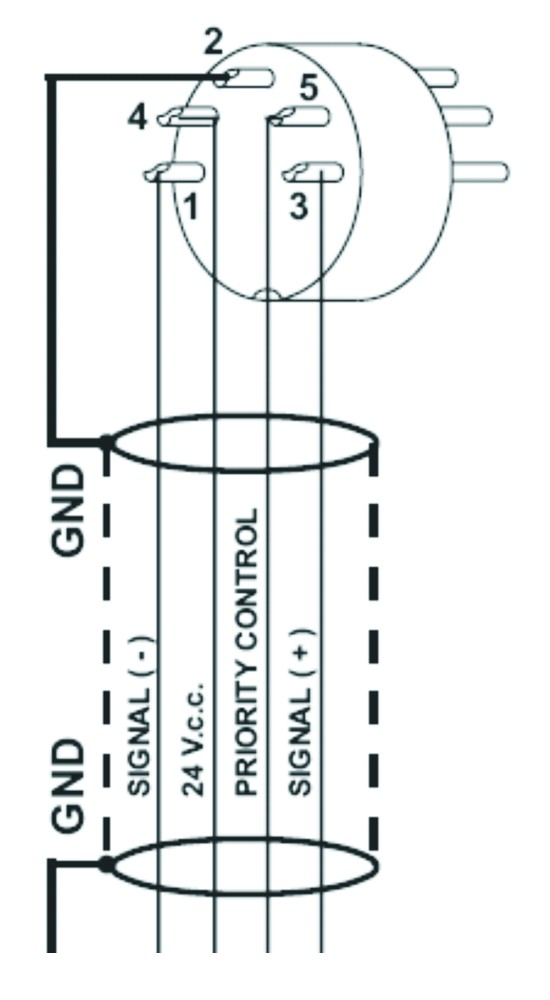
In addition to preamplifiers and mixers, other audio processors are used in PA systems:
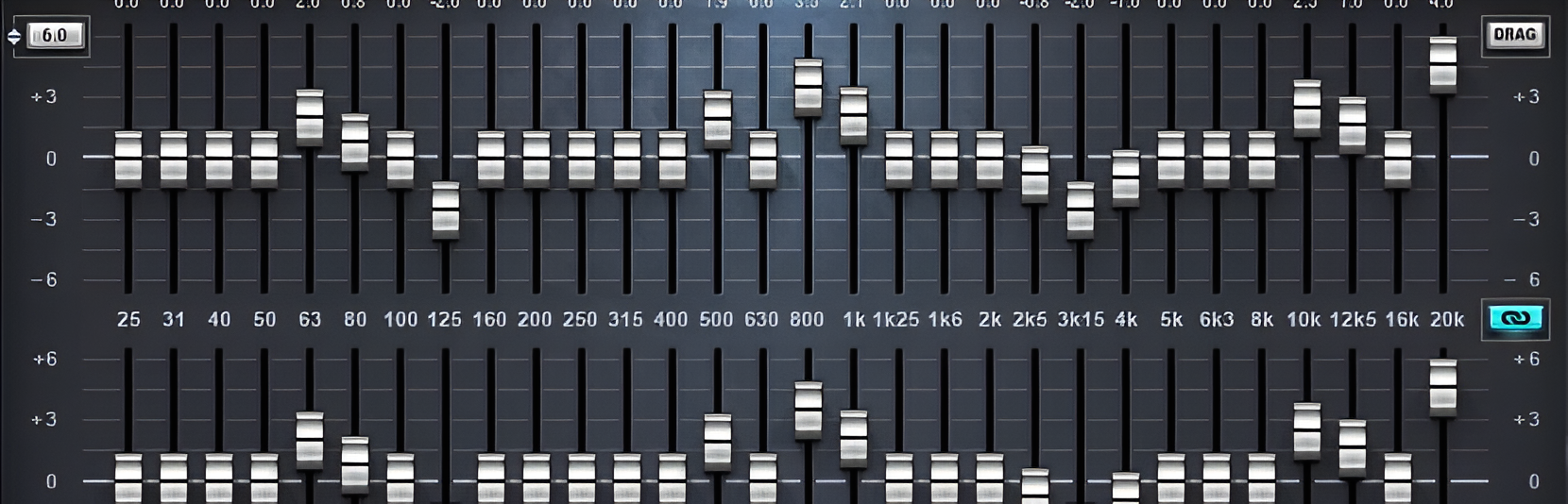
Equalizer
Equipment for adjusting the gain of each audio frequency band into which the sound is divided. These are available with one or two channels, and the number of frequency bands varies depending on the model. A simple tone control (bass and treble) would be a two-band equalizer.
Acoustic feedback suppressor
A specific filter that eliminates acoustic feedback frequencies, also known as the Larsen effect. It occurs when the microphone picks up sound from the speakers and is amplified again, in a cycle that ends in a typically high-pitched and annoying beep, the frequency of which depends on the location of the speakers and microphone, as well as the venue. These devices typically incorporate systems for automatically detecting feedback frequencies.
If an installation involves physical proximity between the speaker and microphone (common in a church, for example), directional microphones should be used, the speakers should be oriented appropriately, the microphone and power amp gain levels should be adjusted, and a suppressor should be used to equalize the system's frequency response and suppress potential feedback frequencies.
Limiter
Equipment designed to prevent the dB SPL set by regulations from being exceeded in order to comply with the law.
Compressor
Equipment that reduces the dynamic range of the audio signal to protect equipment from signal peaks or disguise saturated signals.
DSP (Digital Signal Processing) Functions
Sophisticated equipment with A/D and D/A converters and specific processors, which process digital audio signals and add multiple functions and configurations: graphic and parametric equalizer, signal delays, filters (high-pass, low-pass, stopband, notch...), noise gate, gain control, compressor, limiter...