Transformerless speakers have a typical impedance ranging from 4 to 32 Ω, with common values being 4, 8, 16, and 32 Ω. Amplifiers with power outputs of these impedances are used in home audio or professional sound installations. The load (i.e., the resulting impedance) of the connected speakers must be equal to or greater than the amplifier's output impedance.
A series, parallel, or mixed connection is used when there is more than one speaker in an installation, with the goal of achieving an impedance as close as possible to that of the amplifier.
Connecting speakers in a row (serial connection)
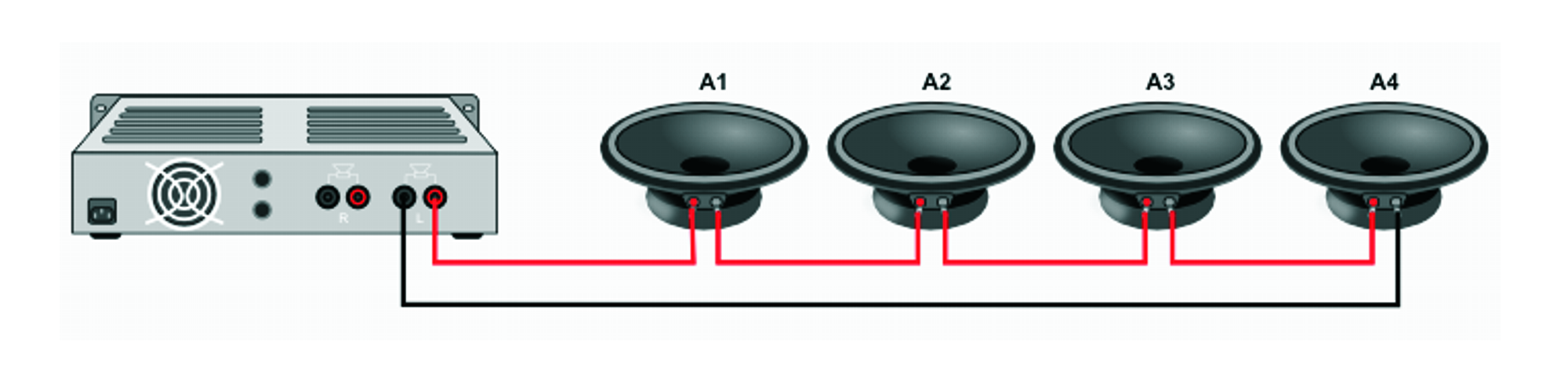
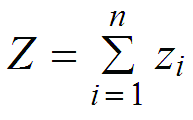
In a serial connection, if one of the speakers is cut off or disconnected, the installation will not work.
Connecting speakers in parallel

mixed speaker connection
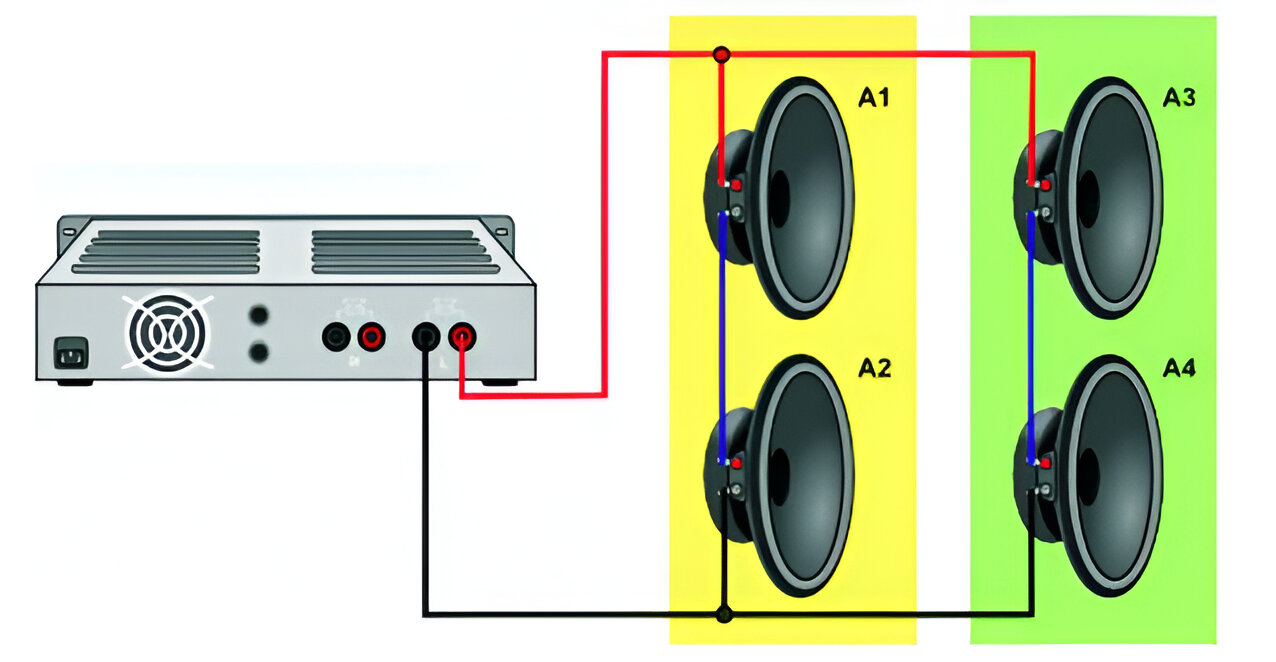
However, mixed connections are a source of potential errors due to their complexity, and they cannot be extended. In the example, the best option would be to connect four 32 ohm speakers in parallel.
Exercise
We have four 8 Ω speakers and the amplifier output is 8 Ω. Which connection is the most suitable?
SOLUTION
- Series: 8 4 = 32 Ω
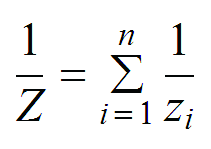
- Parallel: 1/((1/8)·4) = 2 Ω
- Mixed: 1/((1/(8 2))·2) = 8 Ω
- The connection that best fits in terms of impedance is the mixed one.
With a low-impedance connection, the amplifier operates with low voltages and high currents. The distance from the amplifier to the speakers is short, usually no more than 50 m, or requires very large cable cross-sections.
In installations with low-impedance speakers, therefore, care must be taken to adjust the impedance to the maximum and ensure that the connected speakers can handle the maximum power that the amplifier is capable of delivering, to avoid damage.