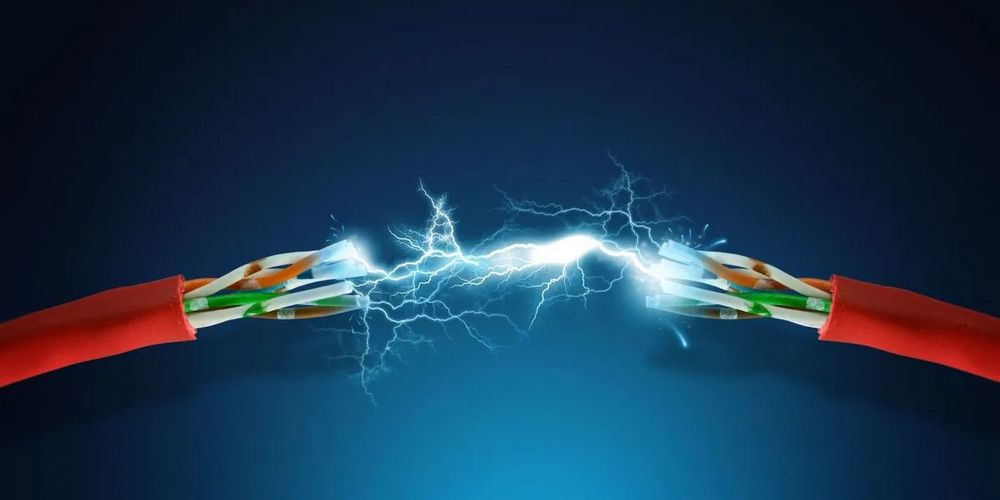

Matter is made up of molecules, and molecules are made up of atoms. Each atom contains a nucleus, with neutrons and protons (+ charge), and electrons (- charge) orbiting it.
Matter tends to be electrically neutral; therefore, if two bodies with unbalanced charges are brought close together, forces of attraction and repulsion occur between them. Electrical voltage refers to the difference between the electrical charges of one body and the other. The unit of measurement is the volt (V).
If these two bodies are connected by a metal wire, a flow of electrons occurs from one to the other to balance the charge. This is called an electric current, and its intensity—its quantity—is measured in amperes (A).
All bodies offer resistance (R) to the passage of electric current. In general terms, we speak of electrical impedance (Z), measured in ohms (Ω).
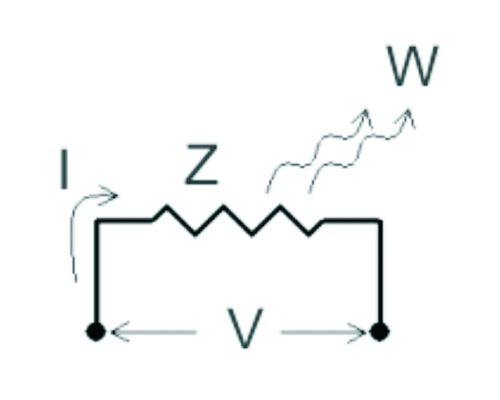
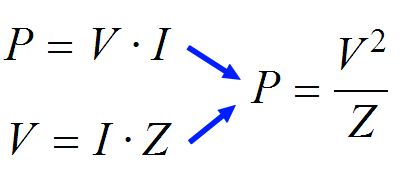
Ohm's law relates voltage (V), current (I), and impedance (Z) in an electronic circuit.
Power (P) is the energy dissipated per unit of time and is measured in watts (W).
Exercise
Exercise
In audio, it's important to note the different definitions of power in equipment descriptions. The most realistic one is the one calculated from the RMS (root-mean-square) voltage a speaker can withstand, measured under regulated and standardized conditions (AES2-1984, IEC268-1 EIA, RS-426-A, EIA RS-426-B), usually with pink noise (a random signal with constant energy across all bands) and for a certain period of time.
This power (also called RMS) best defines the equipment's capacity, as it is the power it will consistently deliver or withstand without problems. Other power ratings include peak power, or Maximum Power Per Output (PMPO), although these only indicate that the amplifier can deliver that power briefly before breaking down...